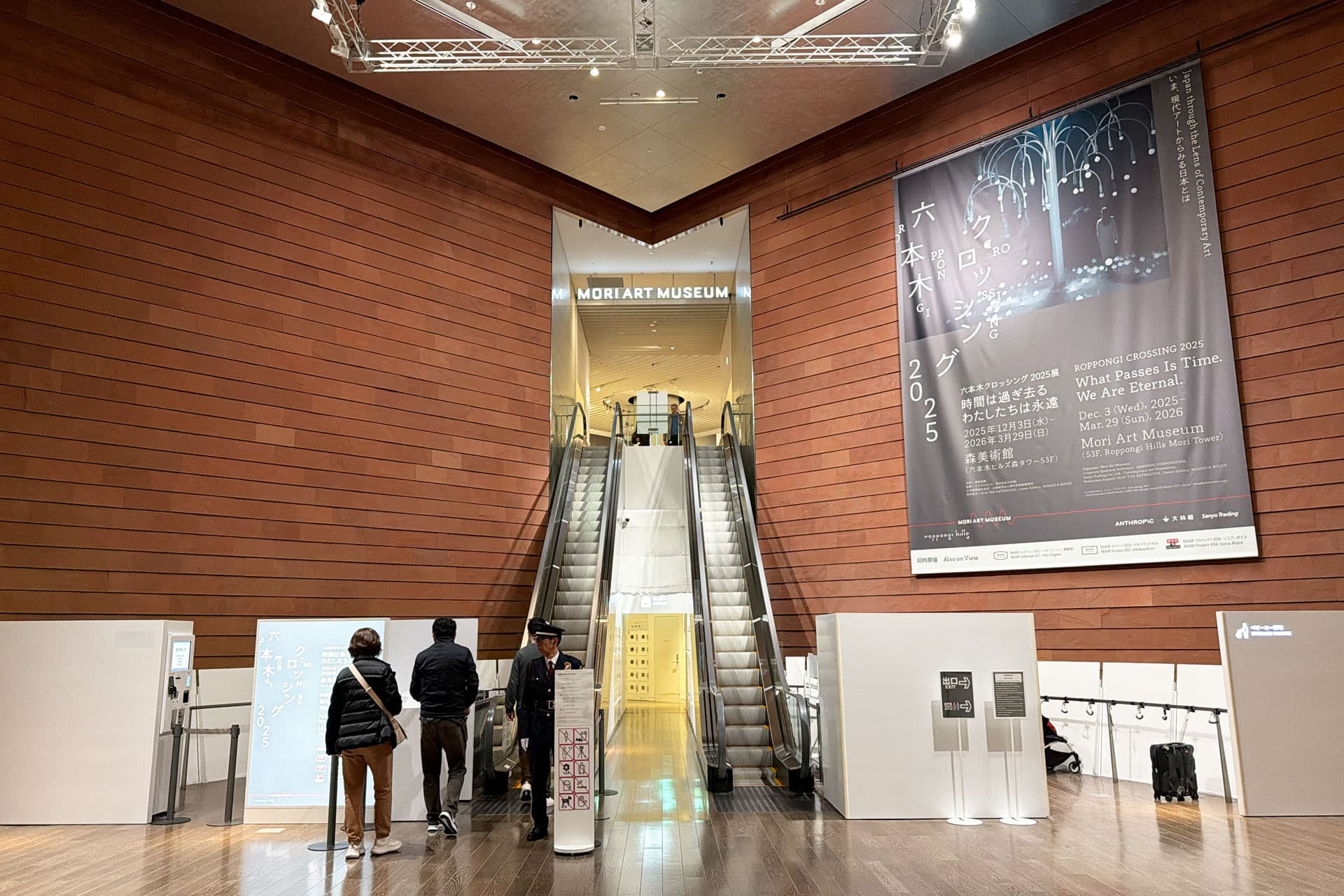
Mori Art Museum-Roppongi Crossing 2025: What Passes Is Time. We Are Eternal.

Mori Art Museum-Roppongi Crossing 2025: What Passes Is Time. We Are Eternal.
A Journey Through Time: Reimagining “Japan”

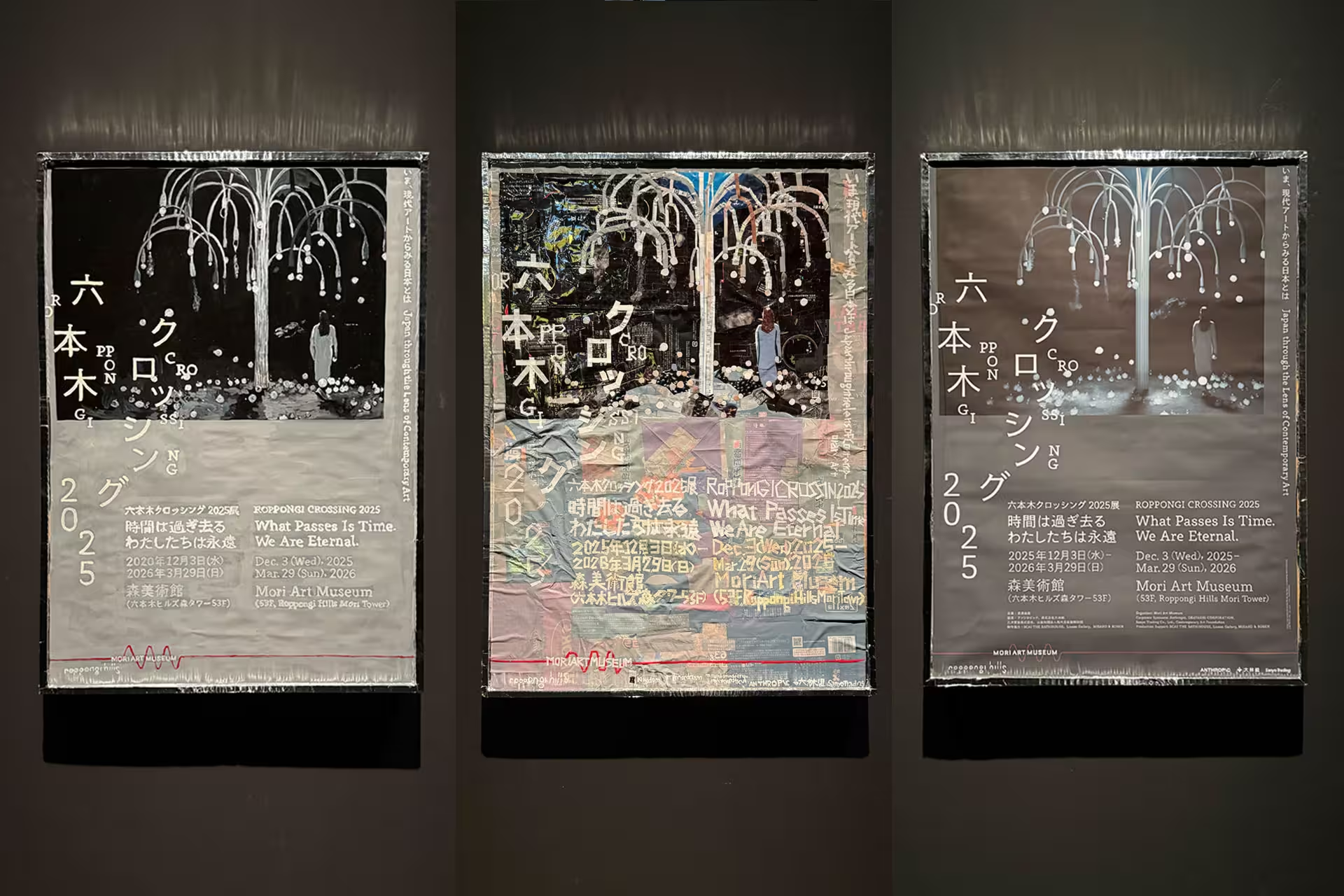
Walking into “Roppongi Crossing 2025: What Passes Is Time. We Are Eternal.” at the Mori Art Museum, I felt immediately enveloped by many interpretations of “time.” The exhibition uses this universal theme to examine contemporary “Japan” through personal, cultural, and geopolitical perspectives.

To help contextualise these impressions, I gave a visitor’s reflection below, followed by the essential exhibition details.

這場位於森美術館的「六本木交叉口 2025:流逝的是時間。我們是永恆。」,不僅是一場當代藝術的集結,更是一場關於「時間」的多重感官體驗。

以下是作為參訪者,整合的參展紀錄:
Mori Art Museum-Roppongi Crossing 2025: What Passes Is Time. We Are Eternal.

The Interplay of Fine Craftsmanship and Visual Impact

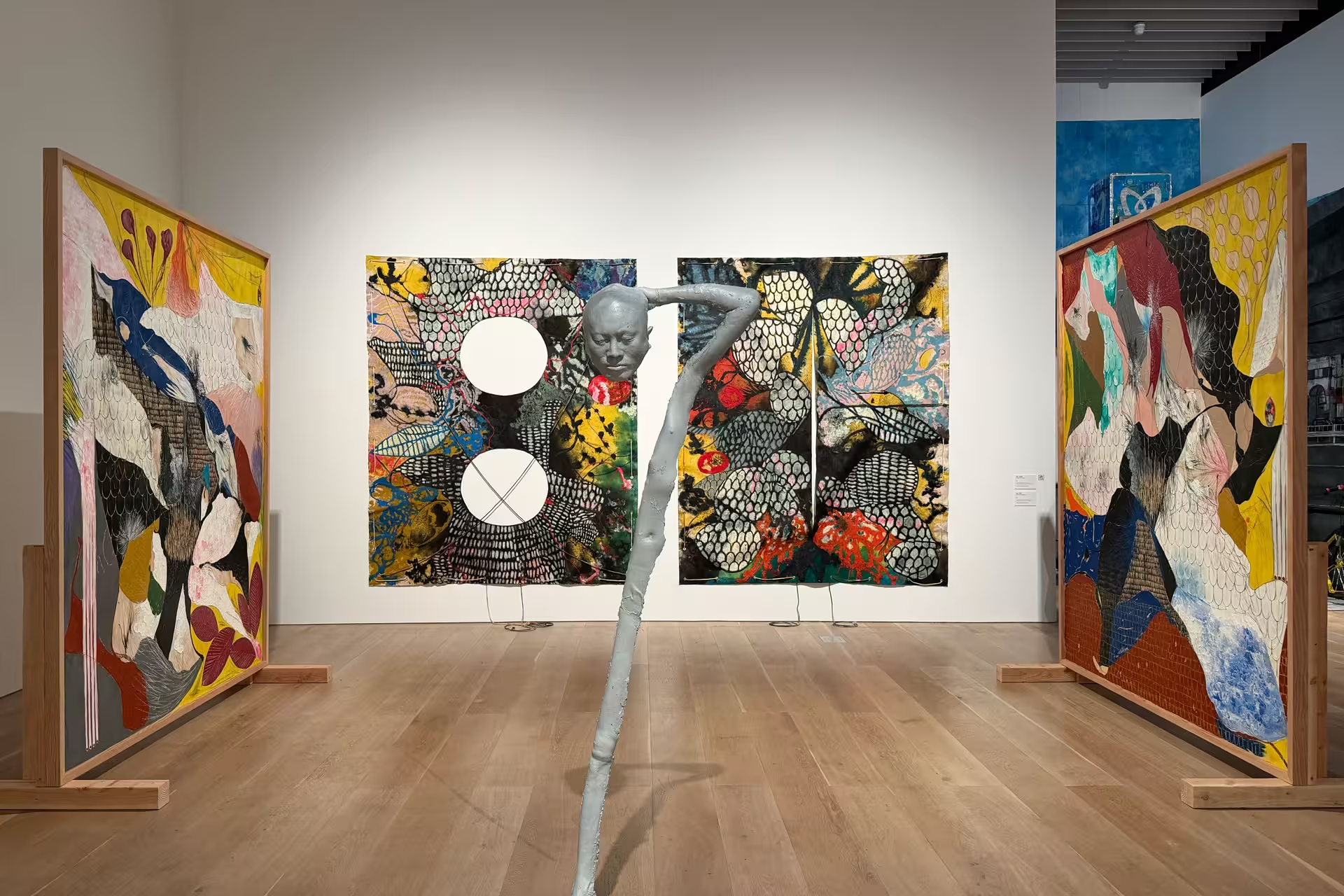
  • Intricate Details: Upon entering, I encountered a diverse array of works. Oki Junko’s embroidery, which resembles delicate abstract paintings, stood out alongside the contributions of Shoji Asami and Hiro Naotaka.

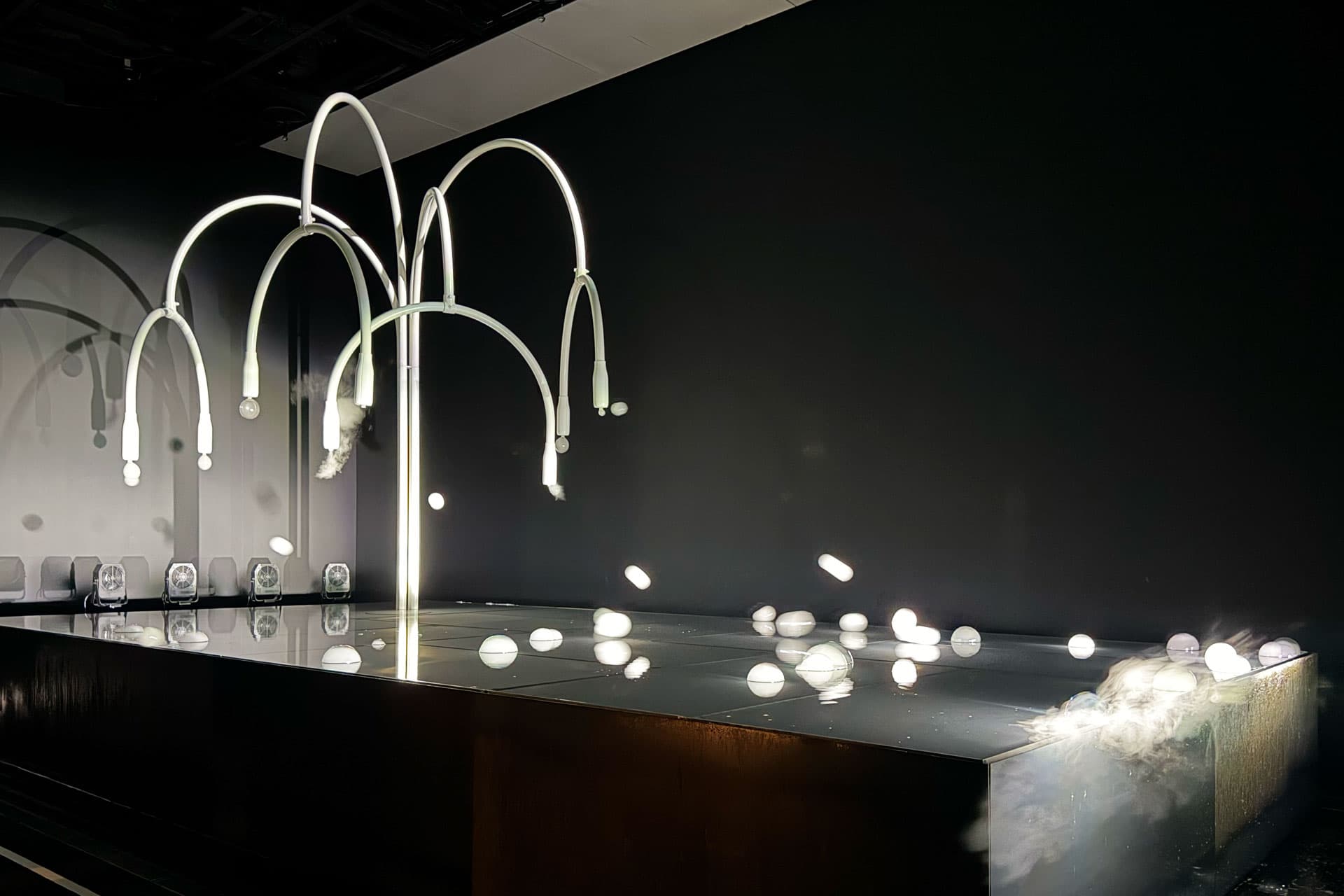
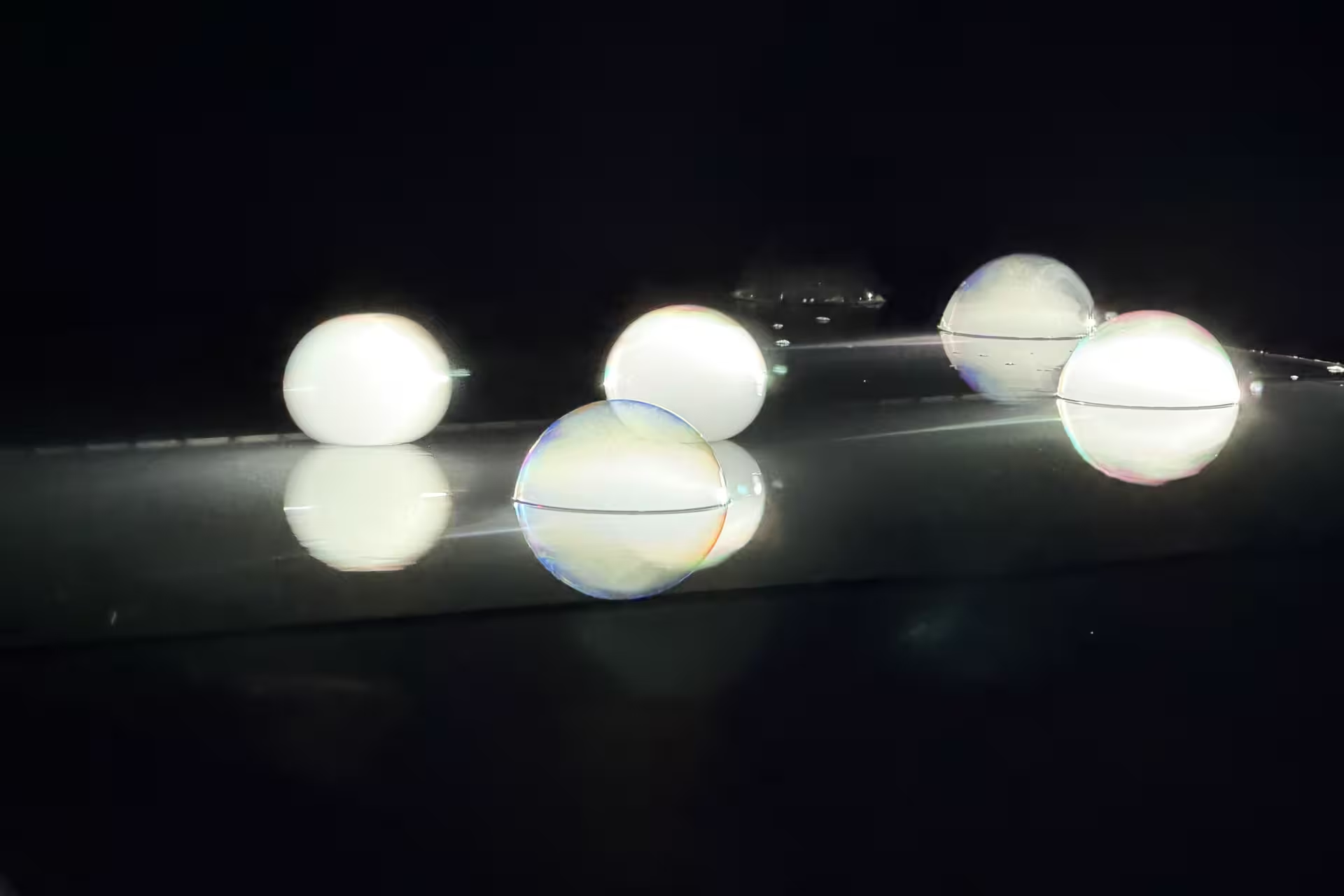
  • Immersive Transformations: Having seen A.A.Murakami’s previous collaborations in Shanghai, seeing The Moon Underwater here was a revelation. This installation uses AI-guided robotics, bubbles, and water to create a space that transcends the boundaries between design and architecture.

  • Stunning Glasswork: Kelly Akashi’s piece, Astral Echo, truly took my breath away. Her use of flame-worked borosilicate glass paired with weathering steel and wood creates a sense of fragility and resonance that feels both ancient and modern.

踏入展場,首先感受到的是策展團隊試圖透過「時間」這個主題,重新定義與審視當代的「日本」。展覽副標題取自印尼詩人 Sapardi Djoko Damono 的詩句,寓意在流逝的瞬間中尋找永恆的意義。

精湛工藝的視覺衝擊: 一進入會場,Oki Junko 猶如抽象畫般的精細刺繡、Shoji Asami 的作品以及 Hiro Naotaka 的裝置藝術交織在一起。最令我驚嘆的是 Kelly Akashi 的琉璃藝術作品《Astral Echo》,她利用精緻的手工硼矽酸鹽玻璃,在木頭與耐候鋼的襯托下,展現出極致的細節美感。

跨越地域的藝術重逢: 曾在上海見過 A.A.Murakami 與 COS 合作的裝置藝術,這次在東京以《The Moon Underwater》之名重新呈現。這件作品結合了 AI 引導的機器人系統、氣泡與水,與過去的呈現方式截然不同,營造出一個超越建築與設計邊界的沉浸式空間。
Mori Art Museum-Roppongi Crossing 2025: What Passes Is Time. We Are Eternal.Mori Art Museum-Roppongi Crossing 2025: What Passes Is Time. We Are Eternal.
Mori Art Museum-Roppongi Crossing 2025: What Passes Is Time. We Are Eternal.

The Blur Between Reality and Artifice

The exhibition masterfully challenges our perception of the everyday:

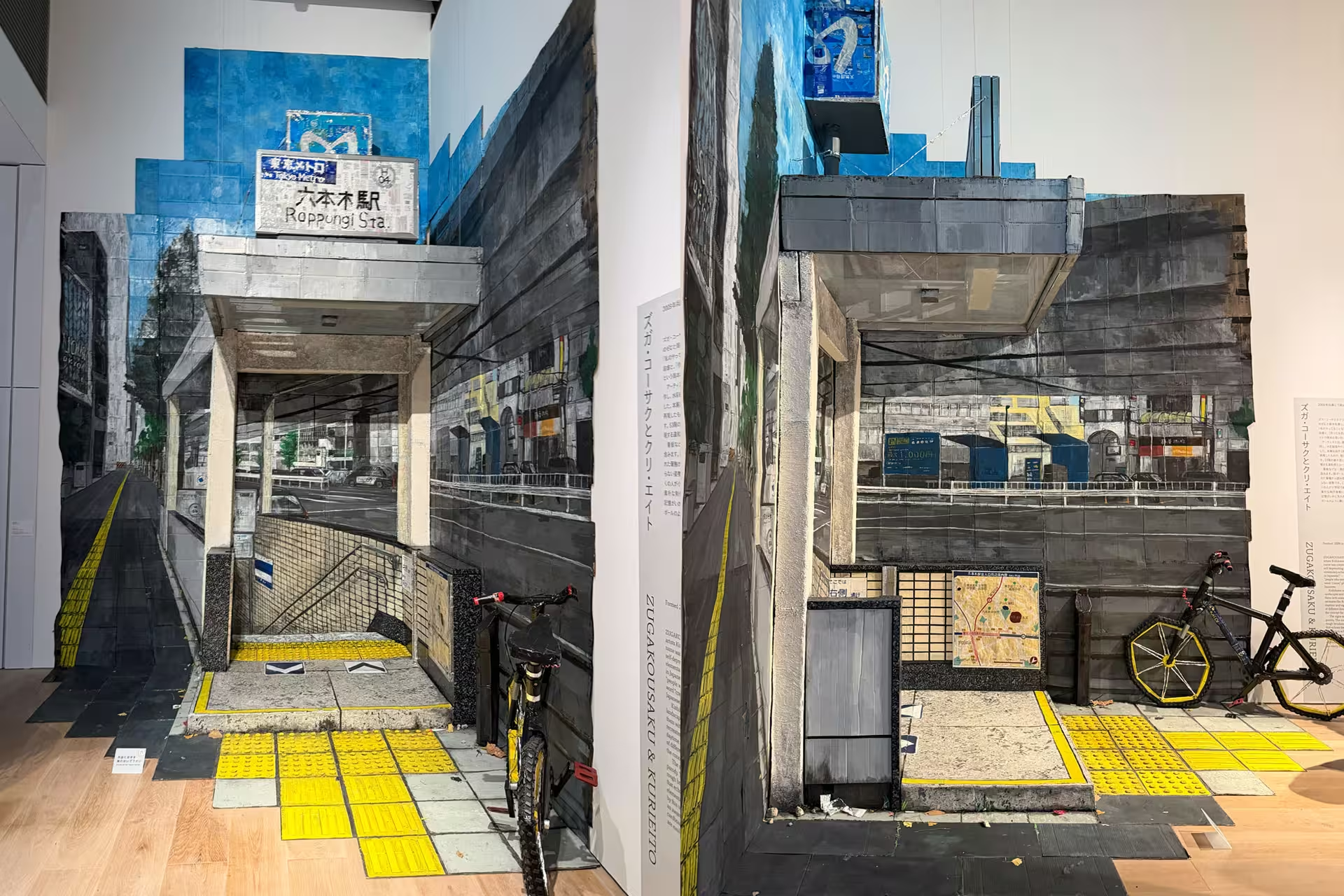
  • Paper Reality: The artist group ZUGAKOUSAKU & KURIEITO presented Subway Exit 2, a life-sized installation made entirely of water-based paint on cardboard. Its lifelike presence makes you feel as though a real subway entrance has manifested inside the gallery.

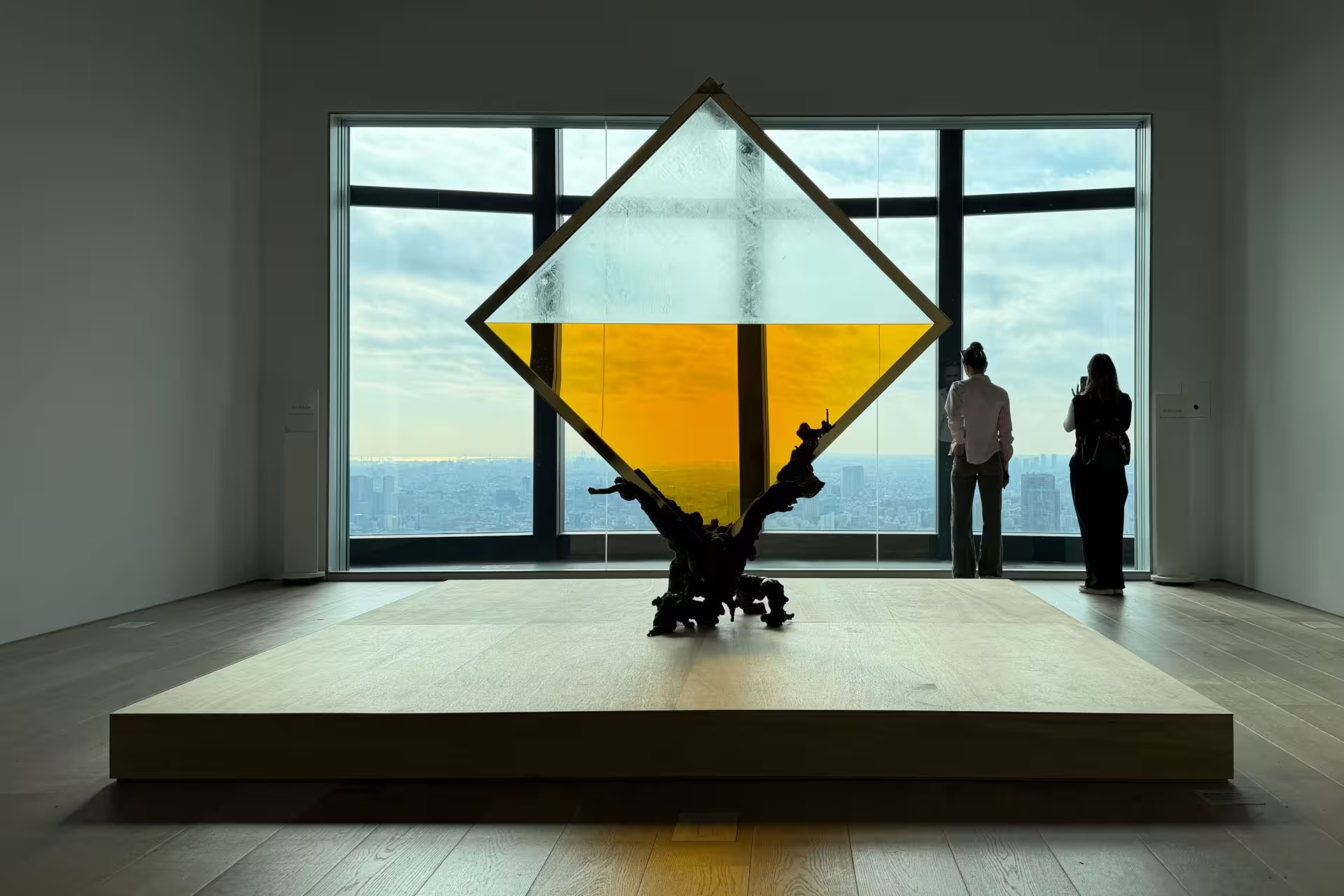
  • The Brandy Horizon: Wada Reijiro’s MITTAG is a striking square glass structure containing brandy. Positioned against the backdrop of the Roppongi high-rises, the liquid forms a golden horizontal line that dialogues beautifully with the urban landscape outside.

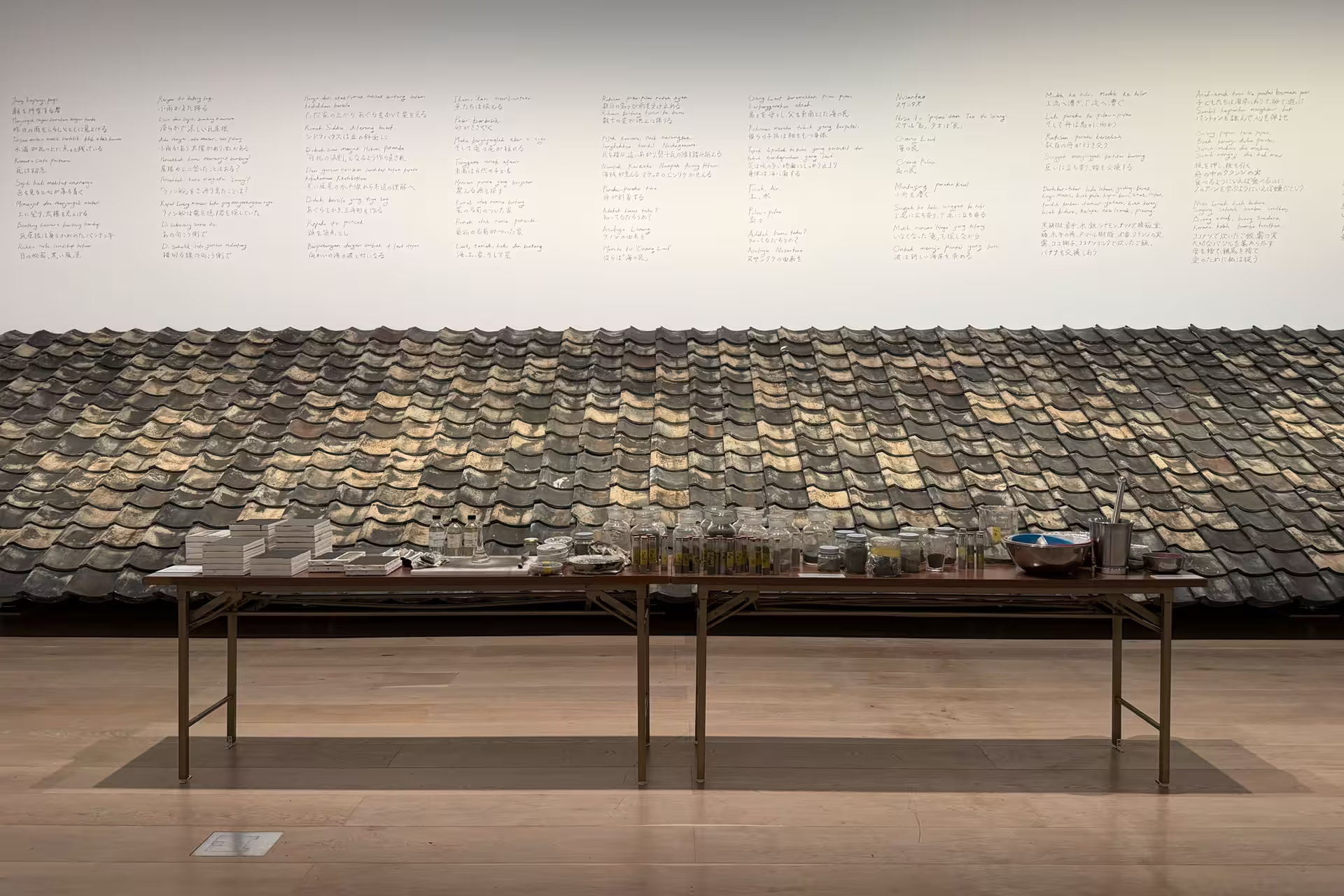
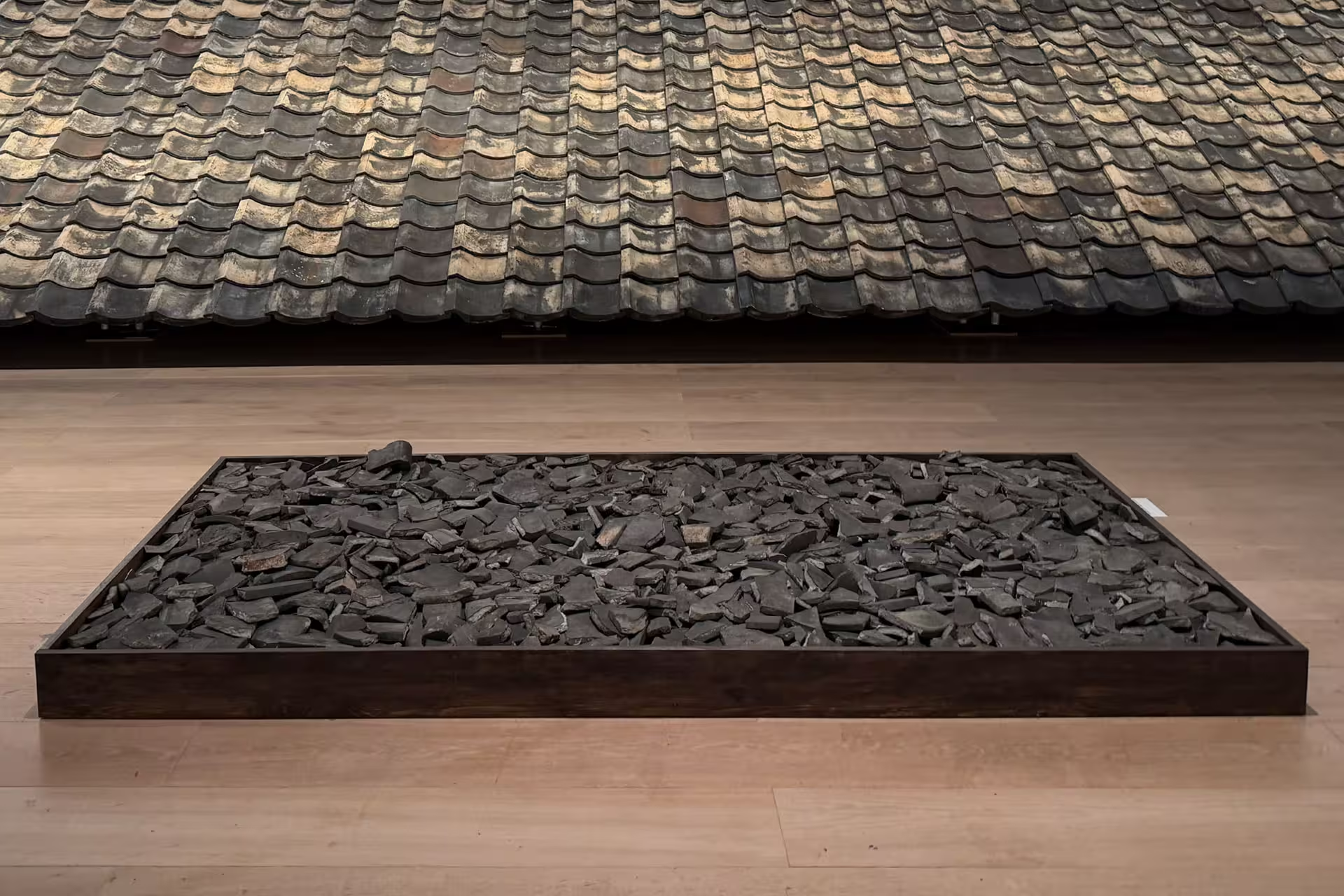
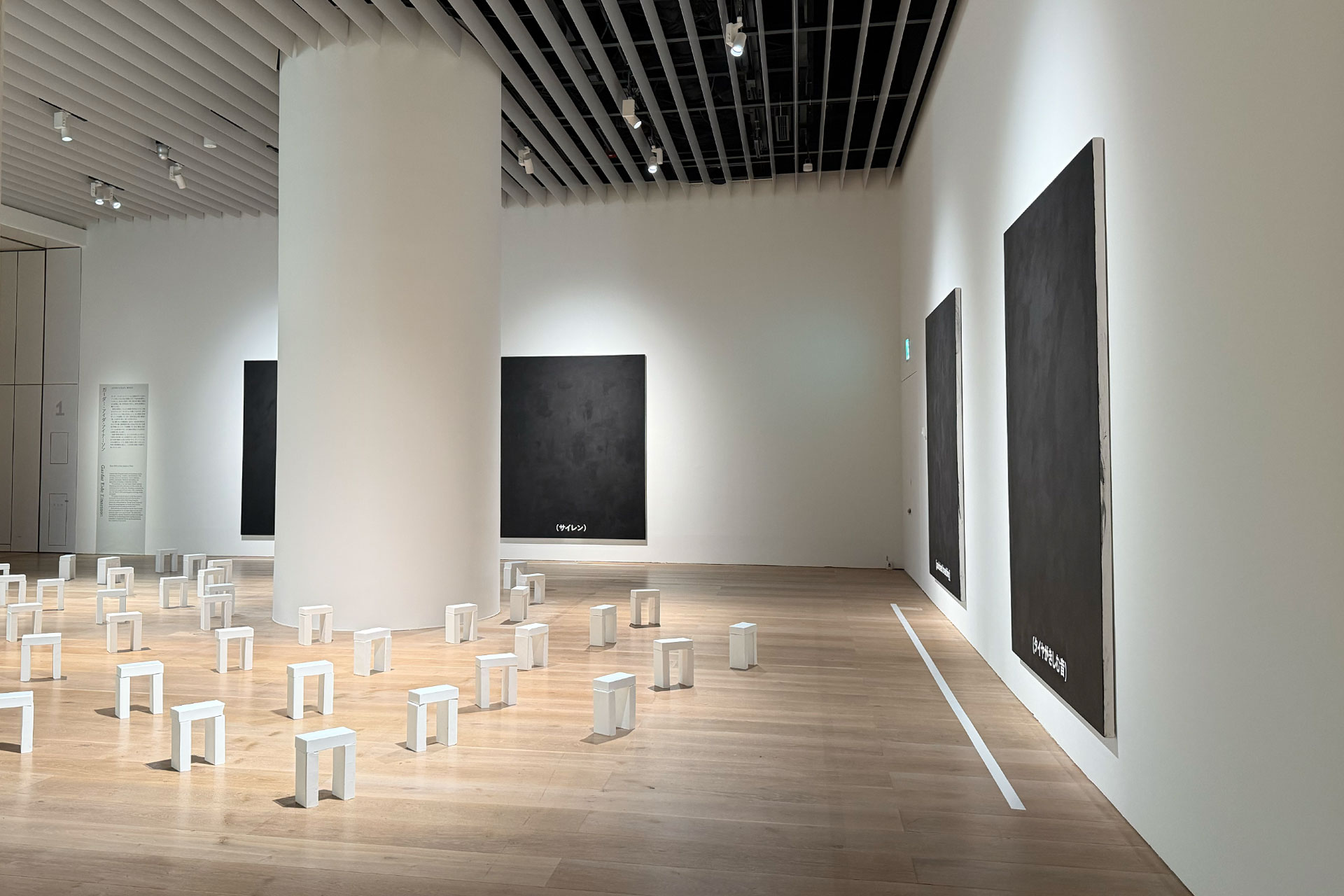
  • Multisensory Experiences: From Shooshie Sulaiman’s installation involving roof tiles to Hosoi Miyu’s new sound piece created from her own voice, the exhibition uses varied media to explore geopolitical and personal time. Contributions from Gardar Eide Einarsson, Kim Insook, and Kitazawa Jun further expand this dialogue into social and regional contexts.

現實與超現實的交界

展覽中許多作品挑戰了我們對日常物件的認知:

紙造的真實感ZUGAKOUSAKU & KURIEITO 的作品《Subway Exit 2》,竟是用瓦楞紙和水性漆造出的車站入口,其真實程度讓人彷彿置身於地鐵站中。

液體的水平線Wada Reijiro 的作品《MITTAG》面對著展覽館窗外的高樓風景,他在正方形玻璃內注入白蘭地,形成一道金色的水平線,將物質與景觀進行了詩意的平行對話。

多元的感官詮釋Shooshie Sulaiman 的屋瓦裝置、Hosoi Miyu 利用自身聲音創作的新型聲響作品,以及 Gardar Eide EinarssonKim InsookKitazawa Jun 的作品,分別從地緣政治、個人記憶到社會專案等不同角度,體現了時間的多元面貌

Journey
poetics_of_graphic_design_small

Modes and Characters : Poetics of Graphic Design

DATE : 2023年11月23日(木・祝) - 2024年3月10日(日)
9-7-6 Akasaka, Minato-ku, Tokyo 107-0052

Mori Art Museum-Roppongi Crossing 2025: What Passes Is Time. We Are Eternal.

Mori Art Museum-Roppongi Crossing 2025: What Passes Is Time. We Are Eternal.
A Journey Through Time: Reimagining “Japan”

Walking into “Roppongi Crossing 2025: What Passes Is Time. We Are Eternal.” at the Mori Art Museum, I felt immediately enveloped by many interpretations of “time.” The exhibition uses this universal theme to examine contemporary “Japan” through personal, cultural, and geopolitical perspectives.

To help contextualise these impressions, I gave a visitor’s reflection below, followed by the essential exhibition details.

這場位於森美術館的「六本木交叉口 2025:流逝的是時間。我們是永恆。」,不僅是一場當代藝術的集結,更是一場關於「時間」的多重感官體驗。

以下是作為參訪者,整合的參展紀錄:

Mori Art Museum-Roppongi Crossing 2025: What Passes Is Time. We Are Eternal.Mori Art Museum-Roppongi Crossing 2025: What Passes Is Time. We Are Eternal.

The Interplay of Fine Craftsmanship and Visual Impact

  • Intricate Details: Upon entering, I encountered a diverse array of works. Oki Junko’s embroidery, which resembles delicate abstract paintings, stood out alongside the contributions of Shoji Asami and Hiro Naotaka.

  • Immersive Transformations: Having seen A.A.Murakami’s previous collaborations in Shanghai, seeing The Moon Underwater here was a revelation. This installation uses AI-guided robotics, bubbles, and water to create a space that transcends the boundaries between design and architecture.

  • Stunning Glasswork: Kelly Akashi’s piece, Astral Echo, truly took my breath away. Her use of flame-worked borosilicate glass paired with weathering steel and wood creates a sense of fragility and resonance that feels both ancient and modern.

踏入展場,首先感受到的是策展團隊試圖透過「時間」這個主題,重新定義與審視當代的「日本」。展覽副標題取自印尼詩人 Sapardi Djoko Damono 的詩句,寓意在流逝的瞬間中尋找永恆的意義。

精湛工藝的視覺衝擊: 一進入會場,Oki Junko 猶如抽象畫般的精細刺繡、Shoji Asami 的作品以及 Hiro Naotaka 的裝置藝術交織在一起。最令我驚嘆的是 Kelly Akashi 的琉璃藝術作品《Astral Echo》,她利用精緻的手工硼矽酸鹽玻璃,在木頭與耐候鋼的襯托下,展現出極致的細節美感。

跨越地域的藝術重逢: 曾在上海見過 A.A.Murakami 與 COS 合作的裝置藝術,這次在東京以《The Moon Underwater》之名重新呈現。這件作品結合了 AI 引導的機器人系統、氣泡與水,與過去的呈現方式截然不同,營造出一個超越建築與設計邊界的沉浸式空間。
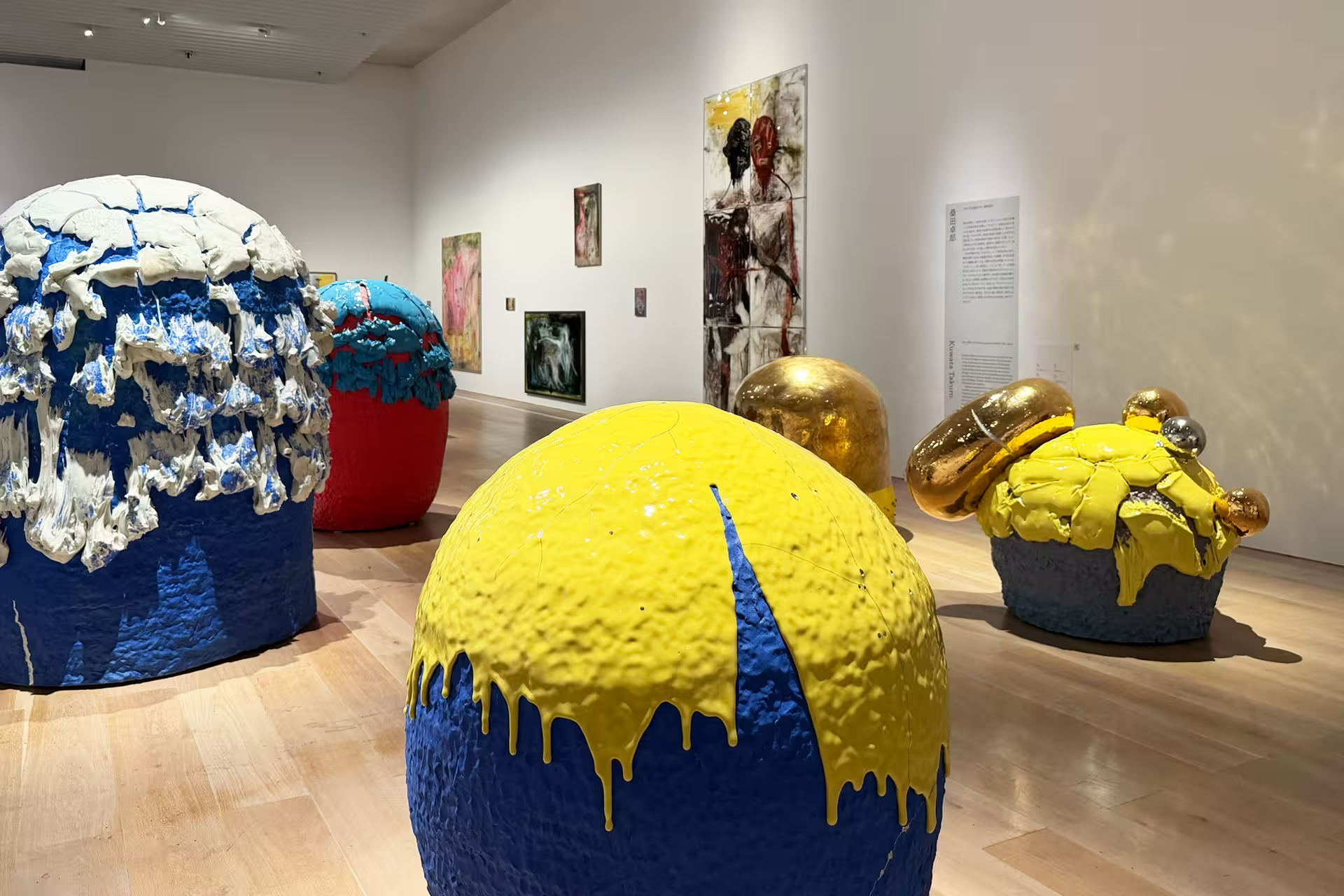
Mori Art Museum-Roppongi Crossing 2025: What Passes Is Time. We Are Eternal.

The Blur Between Reality and Artifice

The exhibition masterfully challenges our perception of the everyday:

  • Paper Reality: The artist group ZUGAKOUSAKU & KURIEITO presented Subway Exit 2, a life-sized installation made entirely of water-based paint on cardboard. Its lifelike presence makes you feel as though a real subway entrance has manifested inside the gallery.

  • The Brandy Horizon: Wada Reijiro’s MITTAG is a striking square glass structure containing brandy. Positioned against the backdrop of the Roppongi high-rises, the liquid forms a golden horizontal line that dialogues beautifully with the urban landscape outside.

  • Multisensory Experiences: From Shooshie Sulaiman’s installation involving roof tiles to Hosoi Miyu’s new sound piece created from her own voice, the exhibition uses varied media to explore geopolitical and personal time. Contributions from Gardar Eide Einarsson, Kim Insook, and Kitazawa Jun further expand this dialogue into social and regional contexts.

現實與超現實的交界

展覽中許多作品挑戰了我們對日常物件的認知:

紙造的真實感ZUGAKOUSAKU & KURIEITO 的作品《Subway Exit 2》,竟是用瓦楞紙和水性漆造出的車站入口,其真實程度讓人彷彿置身於地鐵站中。

液體的水平線Wada Reijiro 的作品《MITTAG》面對著展覽館窗外的高樓風景,他在正方形玻璃內注入白蘭地,形成一道金色的水平線,將物質與景觀進行了詩意的平行對話。

多元的感官詮釋Shooshie Sulaiman 的屋瓦裝置、Hosoi Miyu 利用自身聲音創作的新型聲響作品,以及 Gardar Eide EinarssonKim InsookKitazawa Jun 的作品,分別從地緣政治、個人記憶到社會專案等不同角度,體現了時間的多元面貌

Mori Art Museum-Roppongi Crossing 2025: What Passes Is Time. We Are Eternal.

Concluding with a Game of Possibilities

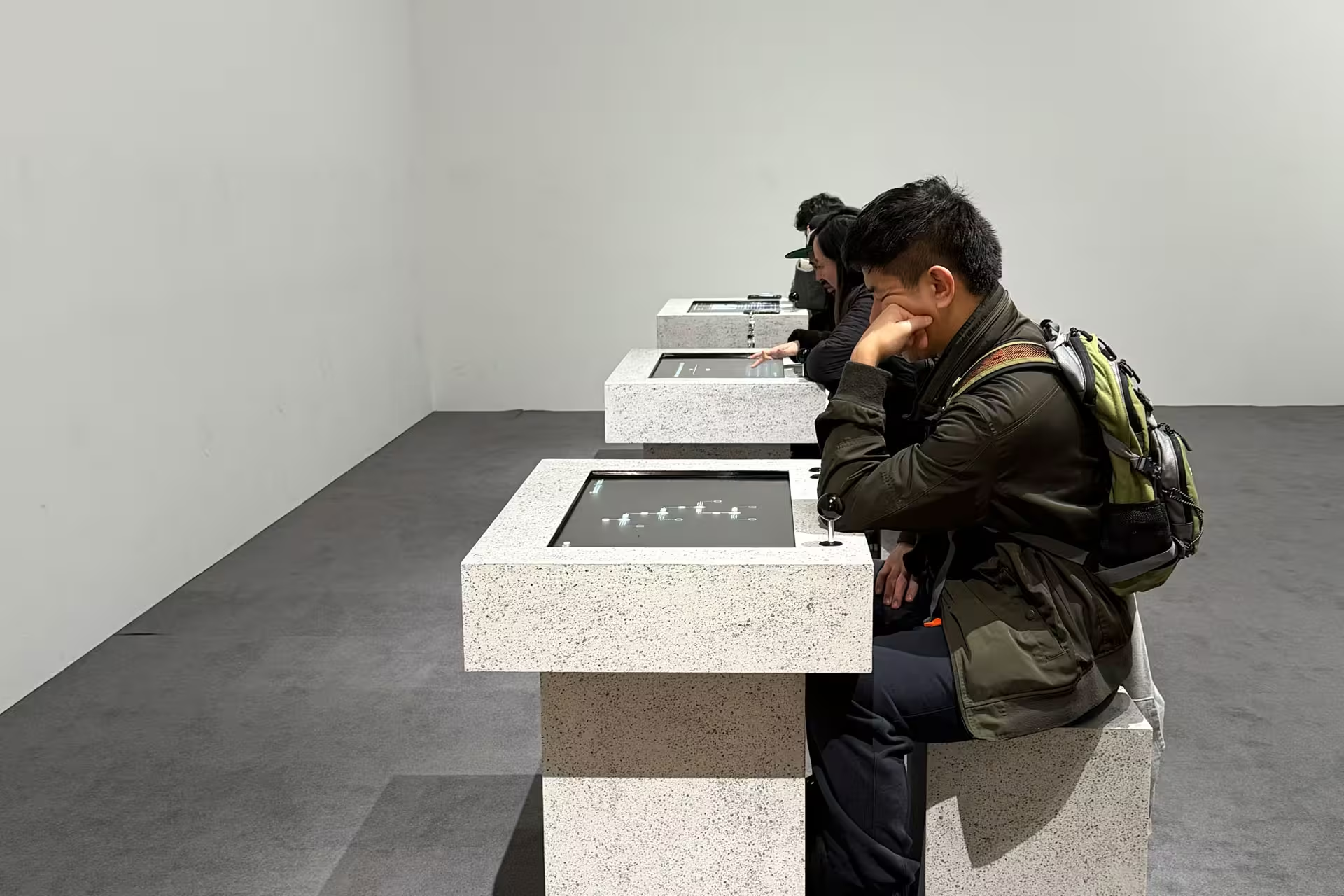
The journey ends with an interactive challenge by Kihara Tomo titled What Plays You? — Game of Possible Lives. This installation, which utilises a large language model (LLM) and a game cabinet, invites us to play with the concept of life itself, forcing a final reflection on how we survive in our increasingly complex society.

總結:一場與未來的遊戲對話

展覽的結尾是由 Kihara Tomo 策劃的互動裝置《What Plays You? — Game of Possible Lives》。這不僅是一台遊戲機,更結合了大型語言模型(LLM),透過提問與遊戲的形式,讓我們在離開前再次思考生存與時間的本質

這場展覽證明了,在日益碎片化的現代社會中,藝術能成為促進同理心與對話的催化劑

Journey
Oharadaijiro_ggg

The 399th ginza graphic gallery Exhibition
Daijiro Ohara HAND BOOK

DATE: December 11, 2023 - January 31, 2024
DNP Ginza Bldg., 7-7-2 Ginza, Chuo-ku, Tokyo 104-0061

Mori Art Museum-Roppongi Crossing 2025: What Passes Is Time. We Are Eternal.

Ryuichi-Sakamoto-9
A Journey Through Time: Reimagining “Japan”

Walking into “Roppongi Crossing 2025: What Passes Is Time. We Are Eternal.” at the Mori Art Museum, I felt immediately enveloped by many interpretations of “time.” The exhibition uses this universal theme to examine contemporary “Japan” through personal, cultural, and geopolitical perspectives.

To help contextualise these impressions, I gave a visitor’s reflection below, followed by the essential exhibition details.

這場位於森美術館的「六本木交叉口 2025:流逝的是時間。我們是永恆。」,不僅是一場當代藝術的集結,更是一場關於「時間」的多重感官體驗。

以下是作為參訪者,整合的參展紀錄:

Sakamoto-Ryuichi-1

Photography : Rolen

The Interplay of Fine Craftsmanship and Visual Impact

  • Intricate Details: Upon entering, I encountered a diverse array of works. Oki Junko’s embroidery, which resembles delicate abstract paintings, stood out alongside the contributions of Shoji Asami and Hiro Naotaka.

  • Immersive Transformations: Having seen A.A.Murakami’s previous collaborations in Shanghai, seeing The Moon Underwater here was a revelation. This installation uses AI-guided robotics, bubbles, and water to create a space that transcends the boundaries between design and architecture.

  • Stunning Glasswork: Kelly Akashi’s piece, Astral Echo, truly took my breath away. Her use of flame-worked borosilicate glass paired with weathering steel and wood creates a sense of fragility and resonance that feels both ancient and modern.

踏入展場,首先感受到的是策展團隊試圖透過「時間」這個主題,重新定義與審視當代的「日本」。展覽副標題取自印尼詩人 Sapardi Djoko Damono 的詩句,寓意在流逝的瞬間中尋找永恆的意義。

精湛工藝的視覺衝擊: 一進入會場,Oki Junko 猶如抽象畫般的精細刺繡、Shoji Asami 的作品以及 Hiro Naotaka 的裝置藝術交織在一起。最令我驚嘆的是 Kelly Akashi 的琉璃藝術作品《Astral Echo》,她利用精緻的手工硼矽酸鹽玻璃,在木頭與耐候鋼的襯托下,展現出極致的細節美感。

跨越地域的藝術重逢: 曾在上海見過 A.A.Murakami 與 COS 合作的裝置藝術,這次在東京以《The Moon Underwater》之名重新呈現。這件作品結合了 AI 引導的機器人系統、氣泡與水,與過去的呈現方式截然不同,營造出一個超越建築與設計邊界的沉浸式空間。
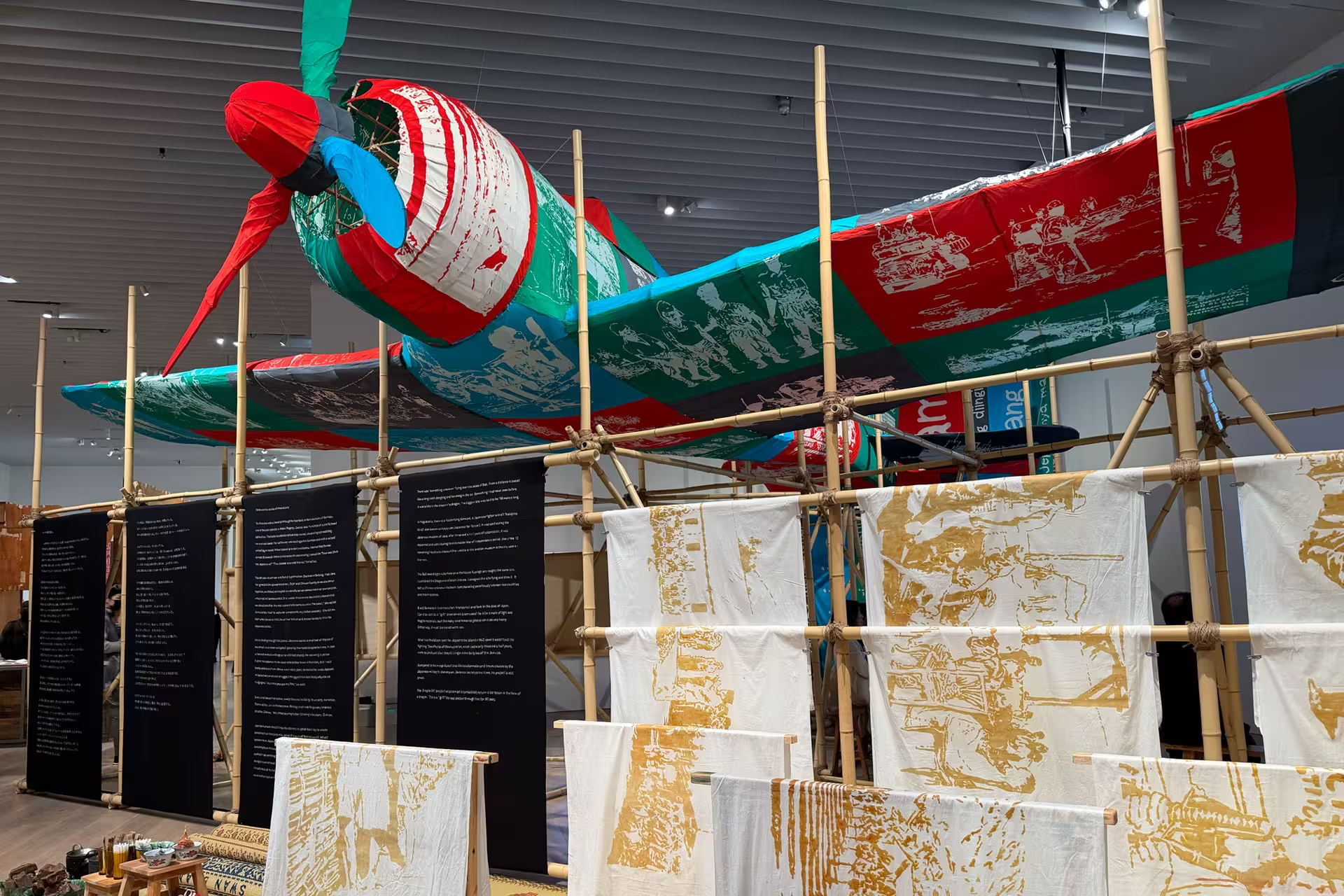
Ryuichi-Sakamoto-4

Photography : Rolen

Ryuichi-Sakamoto-5

Photography : Rolen

The Blur Between Reality and Artifice

The exhibition masterfully challenges our perception of the everyday:

  • Paper Reality: The artist group ZUGAKOUSAKU & KURIEITO presented Subway Exit 2, a life-sized installation made entirely of water-based paint on cardboard. Its lifelike presence makes you feel as though a real subway entrance has manifested inside the gallery.

  • The Brandy Horizon: Wada Reijiro’s MITTAG is a striking square glass structure containing brandy. Positioned against the backdrop of the Roppongi high-rises, the liquid forms a golden horizontal line that dialogues beautifully with the urban landscape outside.

  • Multisensory Experiences: From Shooshie Sulaiman’s installation involving roof tiles to Hosoi Miyu’s new sound piece created from her own voice, the exhibition uses varied media to explore geopolitical and personal time. Contributions from Gardar Eide Einarsson, Kim Insook, and Kitazawa Jun further expand this dialogue into social and regional contexts.

現實與超現實的交界

展覽中許多作品挑戰了我們對日常物件的認知:

紙造的真實感ZUGAKOUSAKU & KURIEITO 的作品《Subway Exit 2》,竟是用瓦楞紙和水性漆造出的車站入口,其真實程度讓人彷彿置身於地鐵站中。

液體的水平線Wada Reijiro 的作品《MITTAG》面對著展覽館窗外的高樓風景,他在正方形玻璃內注入白蘭地,形成一道金色的水平線,將物質與景觀進行了詩意的平行對話。

多元的感官詮釋Shooshie Sulaiman 的屋瓦裝置、Hosoi Miyu 利用自身聲音創作的新型聲響作品,以及 Gardar Eide EinarssonKim InsookKitazawa Jun 的作品,分別從地緣政治、個人記憶到社會專案等不同角度,體現了時間的多元面貌

「坂本龍一 | 音を視る 時を聴く」東京都現代美術館、2024年坂本龍一+高谷史郎《LIFE–fluid, invisible, inaudible...》2007 年 ©2024 KAB Inc. 攝影:浅野豪

「坂本龍一 | 音を視る 時を聴く」東京都現代美術館、2024年坂本龍一+高谷史郎《LIFE–fluid, invisible, inaudible...》2007 年 ©2024 KAB Inc. 攝影:浅野豪

Concluding with a Game of Possibilities

The journey ends with an interactive challenge by Kihara Tomo titled What Plays You? — Game of Possible Lives. This installation, which utilises a large language model (LLM) and a game cabinet, invites us to play with the concept of life itself, forcing a final reflection on how we survive in our increasingly complex society.

總結:一場與未來的遊戲對話

展覽的結尾是由 Kihara Tomo 策劃的互動裝置《What Plays You? — Game of Possible Lives》。這不僅是一台遊戲機,更結合了大型語言模型(LLM),透過提問與遊戲的形式,讓我們在離開前再次思考生存與時間的本質

這場展覽證明了,在日益碎片化的現代社會中,藝術能成為促進同理心與對話的催化劑

Ryuichi-Sakamoto-8Ryuichi-Sakamoto-7

Photography : Rolen

Ryuichi-Sakamoto-2

Photography : Rolen

「坂本龍一 | 音を視る 時を聴く」東京都現代美術館、2024年 坂本龍一 + 高谷史郎《async–immersion tokyo》2024 年 ©2024 KAB Inc. 攝影:浅野豪

「坂本龍一 | 音を視る 時を聴く」東京都現代美術館、2024年 坂本龍一 + 高谷史郎《async–immersion tokyo》2024 年 ©2024 KAB Inc. 攝影:浅野豪

async–Immersion Tokyo

Based on Sakamoto's seminal album Async, this immersive installation brings his visionary music into the spatial realm. Visitors are surrounded by evolving soundscapes and abstract visual elements, creating a multisensory journey through themes of existence, death, and the beauty found in the ordinary. Async–Immersion Tokyo is a poignant exploration of how sound and space can evoke profound emotional connections.

Ryuichi-Sakamoto-12

Photography : Rolen

Ryuichi-Sakamoto-10

Photography : Rolen

This exhibition is more than a retrospective; it brings together famous artists and curators to build the exhibit ideally. It is a dialogue between past and future, honouring Ryuichi Sakamoto's genius and enduring impact. Seeing Sound, Hearing Time offers an unparalleled journey into the transformative power of sound, making it an essential experience for art and music enthusiasts alike.

Collaboration artists | Shiro Takatani, Daito Manabe, Carsten Nicolai, Apichatpong Weerasethakul, Zakkubalan, Toshio Iwai
Special collaboration | Fujiko Nakaya

Journey
Ryuichi Sakamoto_seeing sound, hearing time_6

Seeing Sound, Hearing Time: Ryuichi Sakamoto's |坂本龍一 :音を視る 時を聴く

DATE: December 21, 2024 - March 30, 2025 7days a week 9:00-20:00
MUSEUM OF CONTEMPORARY ART TOKYO
4-1-1 Miyoshi, Koto-ku, Tokyo 135-0022 Japan

Mori Art Museum-Roppongi Crossing 2025: What Passes Is Time. We Are Eternal.

pooploop-cover
A Journey Through Time: Reimagining “Japan”

Walking into “Roppongi Crossing 2025: What Passes Is Time. We Are Eternal.” at the Mori Art Museum, I felt immediately enveloped by many interpretations of “time.” The exhibition uses this universal theme to examine contemporary “Japan” through personal, cultural, and geopolitical perspectives.

To help contextualise these impressions, I gave a visitor’s reflection below, followed by the essential exhibition details.

這場位於森美術館的「六本木交叉口 2025:流逝的是時間。我們是永恆。」,不僅是一場當代藝術的集結,更是一場關於「時間」的多重感官體驗。

以下是作為參訪者,整合的參展紀錄:

pooploop-2

Photography : Rolen

The Interplay of Fine Craftsmanship and Visual Impact

  • Intricate Details: Upon entering, I encountered a diverse array of works. Oki Junko’s embroidery, which resembles delicate abstract paintings, stood out alongside the contributions of Shoji Asami and Hiro Naotaka.

  • Immersive Transformations: Having seen A.A.Murakami’s previous collaborations in Shanghai, seeing The Moon Underwater here was a revelation. This installation uses AI-guided robotics, bubbles, and water to create a space that transcends the boundaries between design and architecture.

  • Stunning Glasswork: Kelly Akashi’s piece, Astral Echo, truly took my breath away. Her use of flame-worked borosilicate glass paired with weathering steel and wood creates a sense of fragility and resonance that feels both ancient and modern.

踏入展場,首先感受到的是策展團隊試圖透過「時間」這個主題,重新定義與審視當代的「日本」。展覽副標題取自印尼詩人 Sapardi Djoko Damono 的詩句,寓意在流逝的瞬間中尋找永恆的意義。

精湛工藝的視覺衝擊: 一進入會場,Oki Junko 猶如抽象畫般的精細刺繡、Shoji Asami 的作品以及 Hiro Naotaka 的裝置藝術交織在一起。最令我驚嘆的是 Kelly Akashi 的琉璃藝術作品《Astral Echo》,她利用精緻的手工硼矽酸鹽玻璃,在木頭與耐候鋼的襯托下,展現出極致的細節美感。

跨越地域的藝術重逢: 曾在上海見過 A.A.Murakami 與 COS 合作的裝置藝術,這次在東京以《The Moon Underwater》之名重新呈現。這件作品結合了 AI 引導的機器人系統、氣泡與水,與過去的呈現方式截然不同,營造出一個超越建築與設計邊界的沉浸式空間。
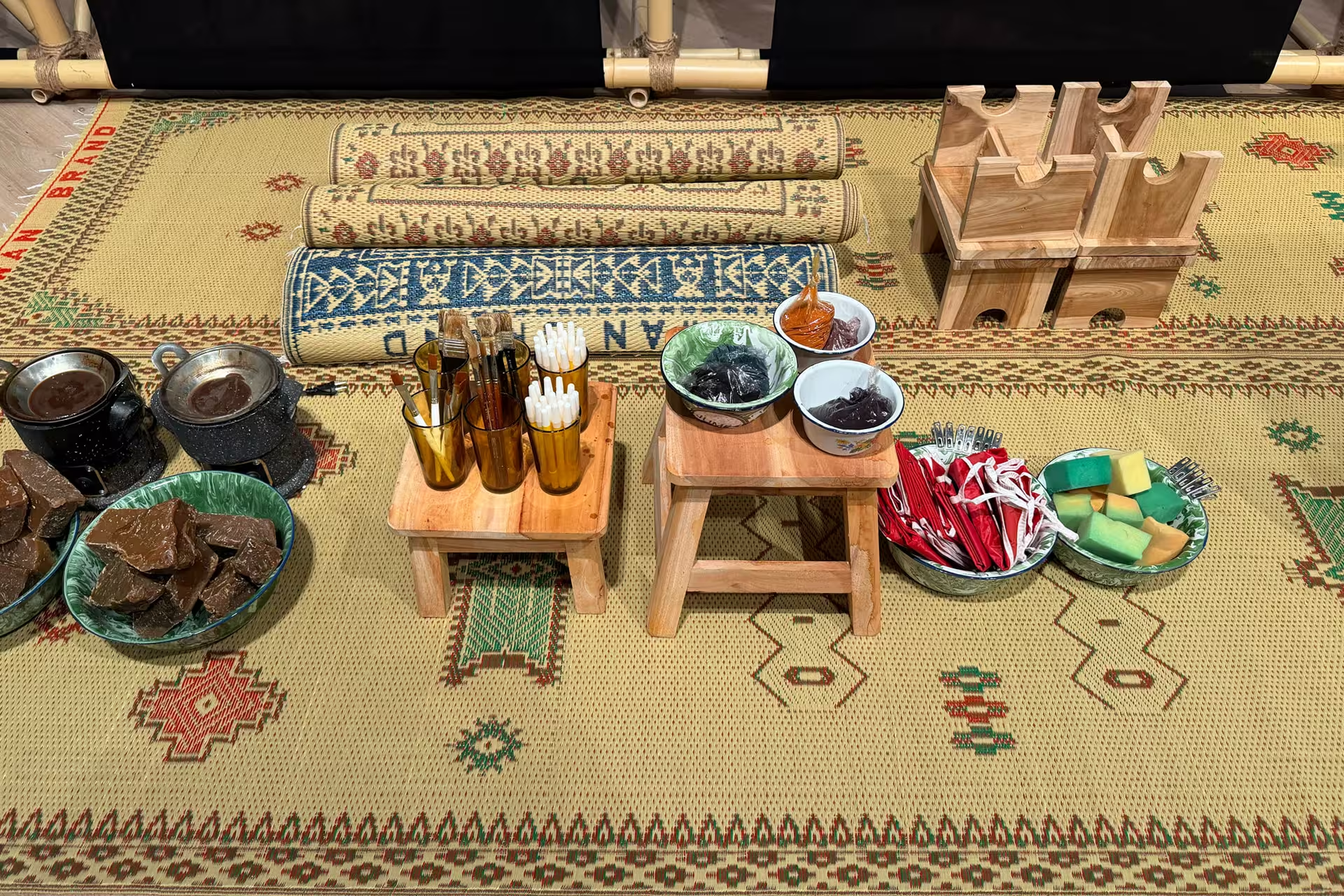
pooploop-3pooploop-4

Photography : Rolen

pooploop-5pooploop-6

Photography : Rolen

pooploop-7

Photography : Rolen

2121_Maestros_13pooploop-10

Photography : Rolen

pooploop-15pooploop-9

Photography : Rolen

pooploop-14

Photography : Rolen

pooploop-13

Photography : Rolen

pooploop-18

Photography : Rolen

pooploop-17

Photography : Rolen

pooploop-19

Photography : Rolen

The Blur Between Reality and Artifice

The exhibition masterfully challenges our perception of the everyday:

  • Paper Reality: The artist group ZUGAKOUSAKU & KURIEITO presented Subway Exit 2, a life-sized installation made entirely of water-based paint on cardboard. Its lifelike presence makes you feel as though a real subway entrance has manifested inside the gallery.

  • The Brandy Horizon: Wada Reijiro’s MITTAG is a striking square glass structure containing brandy. Positioned against the backdrop of the Roppongi high-rises, the liquid forms a golden horizontal line that dialogues beautifully with the urban landscape outside.

  • Multisensory Experiences: From Shooshie Sulaiman’s installation involving roof tiles to Hosoi Miyu’s new sound piece created from her own voice, the exhibition uses varied media to explore geopolitical and personal time. Contributions from Gardar Eide Einarsson, Kim Insook, and Kitazawa Jun further expand this dialogue into social and regional contexts.

現實與超現實的交界

展覽中許多作品挑戰了我們對日常物件的認知:

紙造的真實感ZUGAKOUSAKU & KURIEITO 的作品《Subway Exit 2》,竟是用瓦楞紙和水性漆造出的車站入口,其真實程度讓人彷彿置身於地鐵站中。

液體的水平線Wada Reijiro 的作品《MITTAG》面對著展覽館窗外的高樓風景,他在正方形玻璃內注入白蘭地,形成一道金色的水平線,將物質與景觀進行了詩意的平行對話。

多元的感官詮釋Shooshie Sulaiman 的屋瓦裝置、Hosoi Miyu 利用自身聲音創作的新型聲響作品,以及 Gardar Eide EinarssonKim InsookKitazawa Jun 的作品,分別從地緣政治、個人記憶到社會專案等不同角度,體現了時間的多元面貌

Journey
906x1209px_pooploop

Exhibition "pooploop"

DATE : September 27 (Fri), 2024 - February 16 (Sun), 2025 - 10:00 - 19:00 ( Entrance until 18:30 )
21_21 DESIGN SIGHT Gallery 1 & 2
9-7-6 Akasaka, Minato-ku, Tokyo 107-0052

Mori Art Museum-Roppongi Crossing 2025: What Passes Is Time. We Are Eternal.

Mori Art Museum-Roppongi Crossing 2025: What Passes Is Time. We Are Eternal.
A Journey Through Time: Reimagining “Japan”

Walking into “Roppongi Crossing 2025: What Passes Is Time. We Are Eternal.” at the Mori Art Museum, I felt immediately enveloped by many interpretations of “time.” The exhibition uses this universal theme to examine contemporary “Japan” through personal, cultural, and geopolitical perspectives.

To help contextualise these impressions, I gave a visitor’s reflection below, followed by the essential exhibition details.

這場位於森美術館的「六本木交叉口 2025:流逝的是時間。我們是永恆。」,不僅是一場當代藝術的集結,更是一場關於「時間」的多重感官體驗。

以下是作為參訪者,整合的參展紀錄:

Mori Art Museum-Roppongi Crossing 2025: What Passes Is Time. We Are Eternal.

View of JUNGLE JAP 1970 photography : Iwata Hiroyuki

The Interplay of Fine Craftsmanship and Visual Impact

  • Intricate Details: Upon entering, I encountered a diverse array of works. Oki Junko’s embroidery, which resembles delicate abstract paintings, stood out alongside the contributions of Shoji Asami and Hiro Naotaka.

  • Immersive Transformations: Having seen A.A.Murakami’s previous collaborations in Shanghai, seeing The Moon Underwater here was a revelation. This installation uses AI-guided robotics, bubbles, and water to create a space that transcends the boundaries between design and architecture.

  • Stunning Glasswork: Kelly Akashi’s piece, Astral Echo, truly took my breath away. Her use of flame-worked borosilicate glass paired with weathering steel and wood creates a sense of fragility and resonance that feels both ancient and modern.

踏入展場,首先感受到的是策展團隊試圖透過「時間」這個主題,重新定義與審視當代的「日本」。展覽副標題取自印尼詩人 Sapardi Djoko Damono 的詩句,寓意在流逝的瞬間中尋找永恆的意義。

精湛工藝的視覺衝擊: 一進入會場,Oki Junko 猶如抽象畫般的精細刺繡、Shoji Asami 的作品以及 Hiro Naotaka 的裝置藝術交織在一起。最令我驚嘆的是 Kelly Akashi 的琉璃藝術作品《Astral Echo》,她利用精緻的手工硼矽酸鹽玻璃,在木頭與耐候鋼的襯托下,展現出極致的細節美感。

跨越地域的藝術重逢: 曾在上海見過 A.A.Murakami 與 COS 合作的裝置藝術,這次在東京以《The Moon Underwater》之名重新呈現。這件作品結合了 AI 引導的機器人系統、氣泡與水,與過去的呈現方式截然不同,營造出一個超越建築與設計邊界的沉浸式空間。

Mori Art Museum-Roppongi Crossing 2025: What Passes Is Time. We Are Eternal.

Photography : Rolen

Mori Art Museum-Roppongi Crossing 2025: What Passes Is Time. We Are Eternal.Mori Art Museum-Roppongi Crossing 2025: What Passes Is Time. We Are Eternal.

Photography : Rolen

Mori Art Museum-Roppongi Crossing 2025: What Passes Is Time. We Are Eternal.Mori Art Museum-Roppongi Crossing 2025: What Passes Is Time. We Are Eternal.

Photography : Rolen

kenzo-10

Photography : Rolen

kenzo-13

Photography : Rolen

kenzo-12

Photography : Rolen

kenzo-9kenzo-11

Photography : Rolen

kenzo-15

Photography : Rolen

kenzo-14

Photography : Rolen

kenzo-16

Photography : Rolen

The Blur Between Reality and Artifice

The exhibition masterfully challenges our perception of the everyday:

  • Paper Reality: The artist group ZUGAKOUSAKU & KURIEITO presented Subway Exit 2, a life-sized installation made entirely of water-based paint on cardboard. Its lifelike presence makes you feel as though a real subway entrance has manifested inside the gallery.

  • The Brandy Horizon: Wada Reijiro’s MITTAG is a striking square glass structure containing brandy. Positioned against the backdrop of the Roppongi high-rises, the liquid forms a golden horizontal line that dialogues beautifully with the urban landscape outside.

  • Multisensory Experiences: From Shooshie Sulaiman’s installation involving roof tiles to Hosoi Miyu’s new sound piece created from her own voice, the exhibition uses varied media to explore geopolitical and personal time. Contributions from Gardar Eide Einarsson, Kim Insook, and Kitazawa Jun further expand this dialogue into social and regional contexts.

現實與超現實的交界

展覽中許多作品挑戰了我們對日常物件的認知:

紙造的真實感ZUGAKOUSAKU & KURIEITO 的作品《Subway Exit 2》,竟是用瓦楞紙和水性漆造出的車站入口,其真實程度讓人彷彿置身於地鐵站中。

液體的水平線Wada Reijiro 的作品《MITTAG》面對著展覽館窗外的高樓風景,他在正方形玻璃內注入白蘭地,形成一道金色的水平線,將物質與景觀進行了詩意的平行對話。

多元的感官詮釋Shooshie Sulaiman 的屋瓦裝置、Hosoi Miyu 利用自身聲音創作的新型聲響作品,以及 Gardar Eide EinarssonKim InsookKitazawa Jun 的作品,分別從地緣政治、個人記憶到社會專案等不同角度,體現了時間的多元面貌

Journey
Kenzo-907x1209

Takada Kenzo: Chasing Dreams Exhibition

Dates: July 6 – September 26, 2024
Tokyo Opera City Art Gallery
3 Chome-20-2 Nishishinjuku, Shinjuku City, Tokyo 163-1403日本

Mori Art Museum-Roppongi Crossing 2025: What Passes Is Time. We Are Eternal.

Mori Art Museum-Roppongi Crossing 2025: What Passes Is Time. We Are Eternal.
A Journey Through Time: Reimagining “Japan”

Walking into “Roppongi Crossing 2025: What Passes Is Time. We Are Eternal.” at the Mori Art Museum, I felt immediately enveloped by many interpretations of “time.” The exhibition uses this universal theme to examine contemporary “Japan” through personal, cultural, and geopolitical perspectives.

To help contextualise these impressions, I gave a visitor’s reflection below, followed by the essential exhibition details.

這場位於森美術館的「六本木交叉口 2025:流逝的是時間。我們是永恆。」,不僅是一場當代藝術的集結,更是一場關於「時間」的多重感官體驗。

以下是作為參訪者,整合的參展紀錄:

Mori Art Museum-Roppongi Crossing 2025: What Passes Is Time. We Are Eternal.

Photography : Rolen

Mori Art Museum-Roppongi Crossing 2025: What Passes Is Time. We Are Eternal.Mori Art Museum-Roppongi Crossing 2025: What Passes Is Time. We Are Eternal.

Photography : Rolen

The Interplay of Fine Craftsmanship and Visual Impact

  • Intricate Details: Upon entering, I encountered a diverse array of works. Oki Junko’s embroidery, which resembles delicate abstract paintings, stood out alongside the contributions of Shoji Asami and Hiro Naotaka.

  • Immersive Transformations: Having seen A.A.Murakami’s previous collaborations in Shanghai, seeing The Moon Underwater here was a revelation. This installation uses AI-guided robotics, bubbles, and water to create a space that transcends the boundaries between design and architecture.

  • Stunning Glasswork: Kelly Akashi’s piece, Astral Echo, truly took my breath away. Her use of flame-worked borosilicate glass paired with weathering steel and wood creates a sense of fragility and resonance that feels both ancient and modern.

踏入展場,首先感受到的是策展團隊試圖透過「時間」這個主題,重新定義與審視當代的「日本」。展覽副標題取自印尼詩人 Sapardi Djoko Damono 的詩句,寓意在流逝的瞬間中尋找永恆的意義。

精湛工藝的視覺衝擊: 一進入會場,Oki Junko 猶如抽象畫般的精細刺繡、Shoji Asami 的作品以及 Hiro Naotaka 的裝置藝術交織在一起。最令我驚嘆的是 Kelly Akashi 的琉璃藝術作品《Astral Echo》,她利用精緻的手工硼矽酸鹽玻璃,在木頭與耐候鋼的襯托下,展現出極致的細節美感。

跨越地域的藝術重逢: 曾在上海見過 A.A.Murakami 與 COS 合作的裝置藝術,這次在東京以《The Moon Underwater》之名重新呈現。這件作品結合了 AI 引導的機器人系統、氣泡與水,與過去的呈現方式截然不同,營造出一個超越建築與設計邊界的沉浸式空間。

Mori Art Museum-Roppongi Crossing 2025: What Passes Is Time. We Are Eternal.

Photography : Rolen

Photography : Rolen

Photography : Rolen
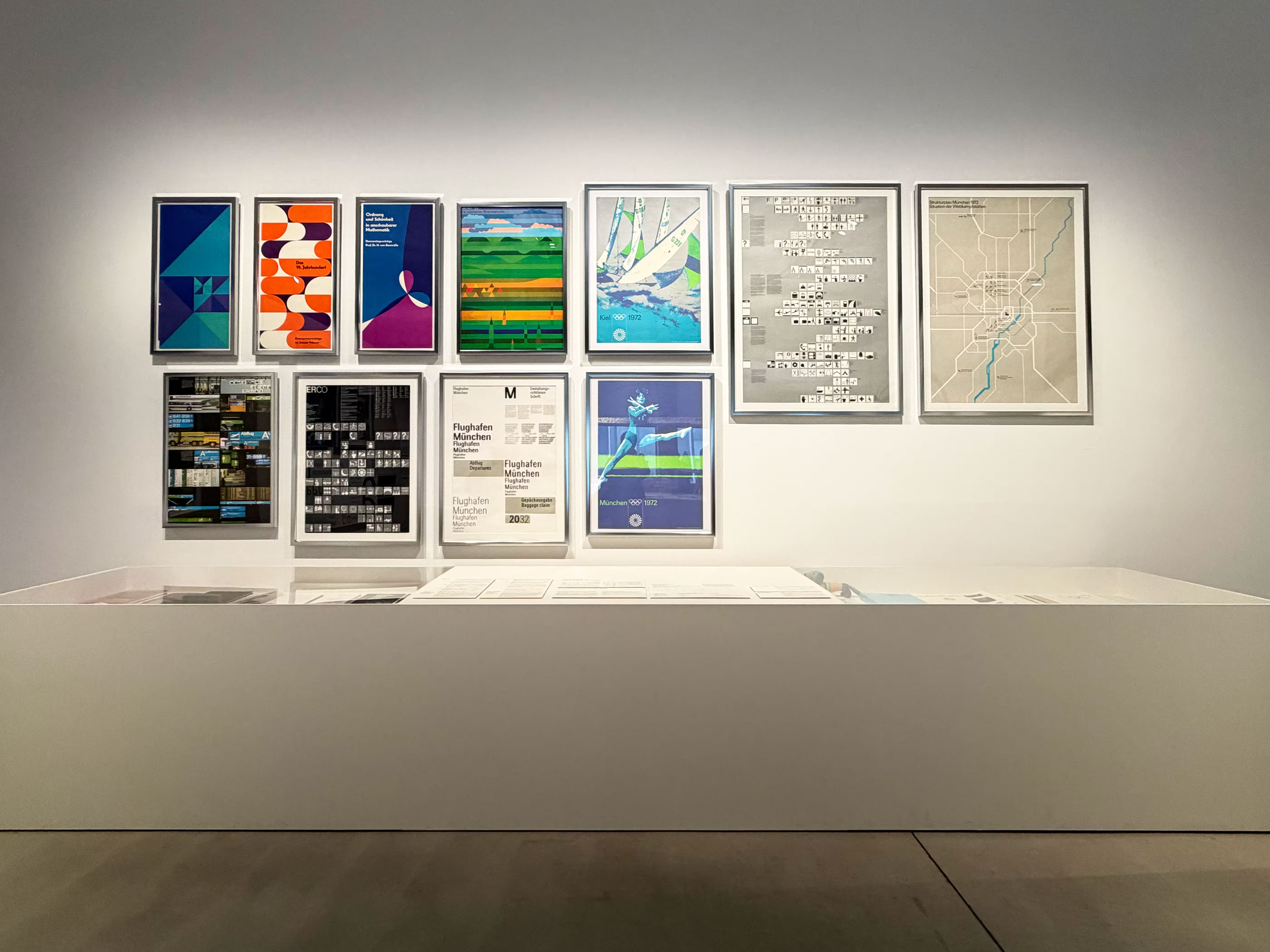
Mori Art Museum-Roppongi Crossing 2025: What Passes Is Time. We Are Eternal.

Photography : Rolen

The Blur Between Reality and Artifice

The exhibition masterfully challenges our perception of the everyday:

  • Paper Reality: The artist group ZUGAKOUSAKU & KURIEITO presented Subway Exit 2, a life-sized installation made entirely of water-based paint on cardboard. Its lifelike presence makes you feel as though a real subway entrance has manifested inside the gallery.

  • The Brandy Horizon: Wada Reijiro’s MITTAG is a striking square glass structure containing brandy. Positioned against the backdrop of the Roppongi high-rises, the liquid forms a golden horizontal line that dialogues beautifully with the urban landscape outside.

  • Multisensory Experiences: From Shooshie Sulaiman’s installation involving roof tiles to Hosoi Miyu’s new sound piece created from her own voice, the exhibition uses varied media to explore geopolitical and personal time. Contributions from Gardar Eide Einarsson, Kim Insook, and Kitazawa Jun further expand this dialogue into social and regional contexts.

現實與超現實的交界

展覽中許多作品挑戰了我們對日常物件的認知:

紙造的真實感ZUGAKOUSAKU & KURIEITO 的作品《Subway Exit 2》,竟是用瓦楞紙和水性漆造出的車站入口,其真實程度讓人彷彿置身於地鐵站中。

液體的水平線Wada Reijiro 的作品《MITTAG》面對著展覽館窗外的高樓風景,他在正方形玻璃內注入白蘭地,形成一道金色的水平線,將物質與景觀進行了詩意的平行對話。

多元的感官詮釋Shooshie Sulaiman 的屋瓦裝置、Hosoi Miyu 利用自身聲音創作的新型聲響作品,以及 Gardar Eide EinarssonKim InsookKitazawa Jun 的作品,分別從地緣政治、個人記憶到社會專案等不同角度,體現了時間的多元面貌

Journey

The 403rd ginza graphic gallery ExhibitionYuri Uenishi
Now Printing

DATE: September 03, 2024 - October 23, 2024
WEB: https://hokkyoku.ltd/
DNP Ginza Bldg., 7-7-2 Ginza, Chuo-ku, Tokyo 104-0061

Mori Art Museum-Roppongi Crossing 2025: What Passes Is Time. We Are Eternal.

pooploop-cover

Walking into “Roppongi Crossing 2025: What Passes Is Time. We Are Eternal.” at the Mori Art Museum, I felt immediately enveloped by many interpretations of “time.” The exhibition uses this universal theme to examine contemporary “Japan” through personal, cultural, and geopolitical perspectives.

To help contextualise these impressions, I gave a visitor’s reflection below, followed by the essential exhibition details.

這場位於森美術館的「六本木交叉口 2025:流逝的是時間。我們是永恆。」,不僅是一場當代藝術的集結,更是一場關於「時間」的多重感官體驗。

以下是作為參訪者,整合的參展紀錄:

pooploop-2

Photography : Rolen

The Interplay of Fine Craftsmanship and Visual Impact

  • Intricate Details: Upon entering, I encountered a diverse array of works. Oki Junko’s embroidery, which resembles delicate abstract paintings, stood out alongside the contributions of Shoji Asami and Hiro Naotaka.

  • Immersive Transformations: Having seen A.A.Murakami’s previous collaborations in Shanghai, seeing The Moon Underwater here was a revelation. This installation uses AI-guided robotics, bubbles, and water to create a space that transcends the boundaries between design and architecture.

  • Stunning Glasswork: Kelly Akashi’s piece, Astral Echo, truly took my breath away. Her use of flame-worked borosilicate glass paired with weathering steel and wood creates a sense of fragility and resonance that feels both ancient and modern.

踏入展場,首先感受到的是策展團隊試圖透過「時間」這個主題,重新定義與審視當代的「日本」。展覽副標題取自印尼詩人 Sapardi Djoko Damono 的詩句,寓意在流逝的瞬間中尋找永恆的意義。

精湛工藝的視覺衝擊: 一進入會場,Oki Junko 猶如抽象畫般的精細刺繡、Shoji Asami 的作品以及 Hiro Naotaka 的裝置藝術交織在一起。最令我驚嘆的是 Kelly Akashi 的琉璃藝術作品《Astral Echo》,她利用精緻的手工硼矽酸鹽玻璃,在木頭與耐候鋼的襯托下,展現出極致的細節美感。

跨越地域的藝術重逢: 曾在上海見過 A.A.Murakami 與 COS 合作的裝置藝術,這次在東京以《The Moon Underwater》之名重新呈現。這件作品結合了 AI 引導的機器人系統、氣泡與水,與過去的呈現方式截然不同,營造出一個超越建築與設計邊界的沉浸式空間。

pooploop-3pooploop-4

Photography : Rolen

pooploop-5pooploop-6

Photography : Rolen

pooploop-7

Photography : Rolen

The Blur Between Reality and Artifice

The exhibition masterfully challenges our perception of the everyday:

  • Paper Reality: The artist group ZUGAKOUSAKU & KURIEITO presented Subway Exit 2, a life-sized installation made entirely of water-based paint on cardboard. Its lifelike presence makes you feel as though a real subway entrance has manifested inside the gallery.

  • The Brandy Horizon: Wada Reijiro’s MITTAG is a striking square glass structure containing brandy. Positioned against the backdrop of the Roppongi high-rises, the liquid forms a golden horizontal line that dialogues beautifully with the urban landscape outside.

  • Multisensory Experiences: From Shooshie Sulaiman’s installation involving roof tiles to Hosoi Miyu’s new sound piece created from her own voice, the exhibition uses varied media to explore geopolitical and personal time. Contributions from Gardar Eide Einarsson, Kim Insook, and Kitazawa Jun further expand this dialogue into social and regional contexts.

現實與超現實的交界

展覽中許多作品挑戰了我們對日常物件的認知:

紙造的真實感ZUGAKOUSAKU & KURIEITO 的作品《Subway Exit 2》,竟是用瓦楞紙和水性漆造出的車站入口,其真實程度讓人彷彿置身於地鐵站中。

液體的水平線Wada Reijiro 的作品《MITTAG》面對著展覽館窗外的高樓風景,他在正方形玻璃內注入白蘭地,形成一道金色的水平線,將物質與景觀進行了詩意的平行對話。

多元的感官詮釋Shooshie Sulaiman 的屋瓦裝置、Hosoi Miyu 利用自身聲音創作的新型聲響作品,以及 Gardar Eide EinarssonKim InsookKitazawa Jun 的作品,分別從地緣政治、個人記憶到社會專案等不同角度,體現了時間的多元面貌

2121_Maestros_132121_Maestros_8

Photography : Rolen

2121_Maestros_122121_Maestros_17

Photography : Rolen

2121_Maestros_14

Photography : Rolen

2121_Maestros_6

Photography : Rolen

2121_Maestros_16

Photography : Rolen

2121_Maestros_15

Photography : Rolen

2121_Maestros_18

Photography : Rolen

Concluding with a Game of Possibilities

The journey ends with an interactive challenge by Kihara Tomo titled What Plays You? — Game of Possible Lives. This installation, which utilises a large language model (LLM) and a game cabinet, invites us to play with the concept of life itself, forcing a final reflection on how we survive in our increasingly complex society.

總結:一場與未來的遊戲對話

展覽的結尾是由 Kihara Tomo 策劃的互動裝置《What Plays You? — Game of Possible Lives》。這不僅是一台遊戲機,更結合了大型語言模型(LLM),透過提問與遊戲的形式,讓我們在離開前再次思考生存與時間的本質

這場展覽證明了,在日益碎片化的現代社會中,藝術能成為促進同理心與對話的催化劑

Journey
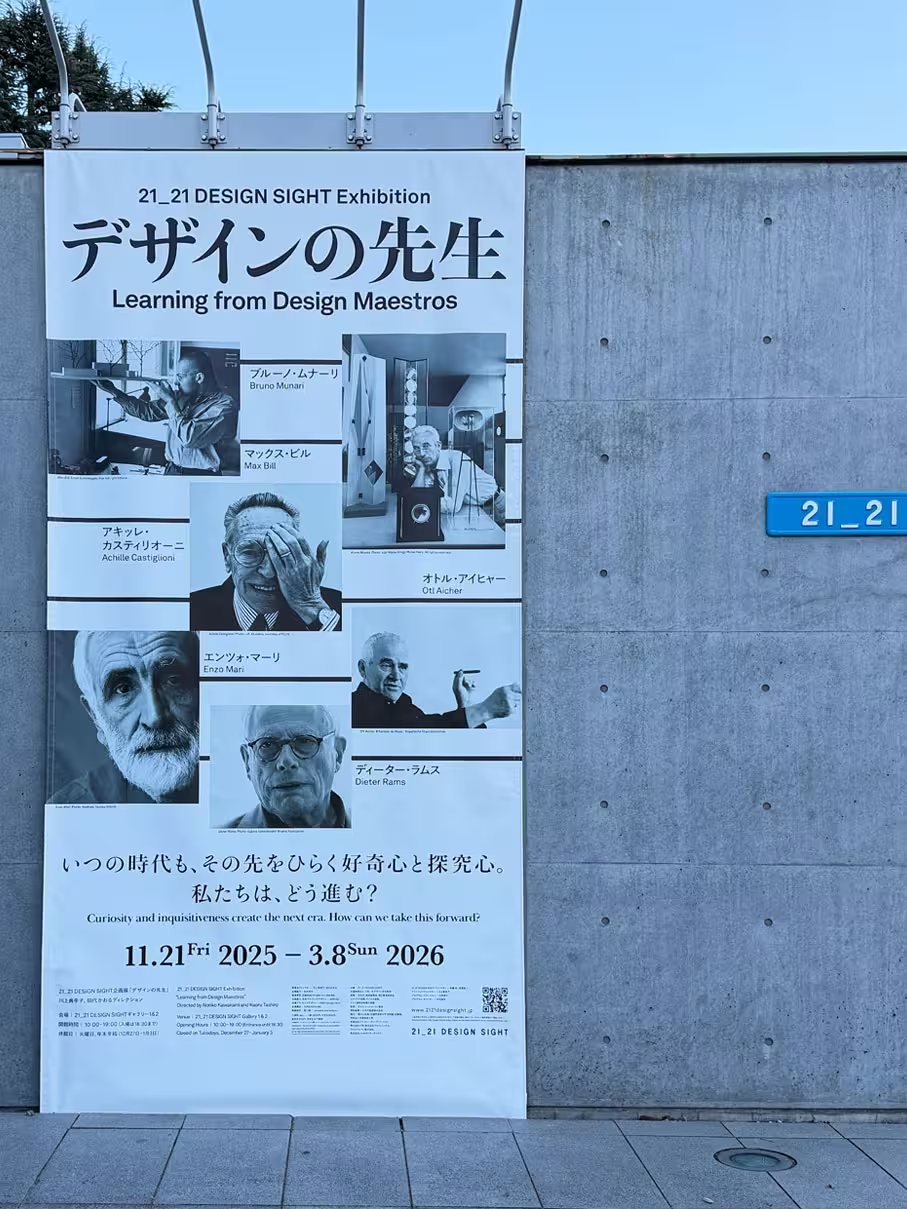
2121_Maestros_vertical

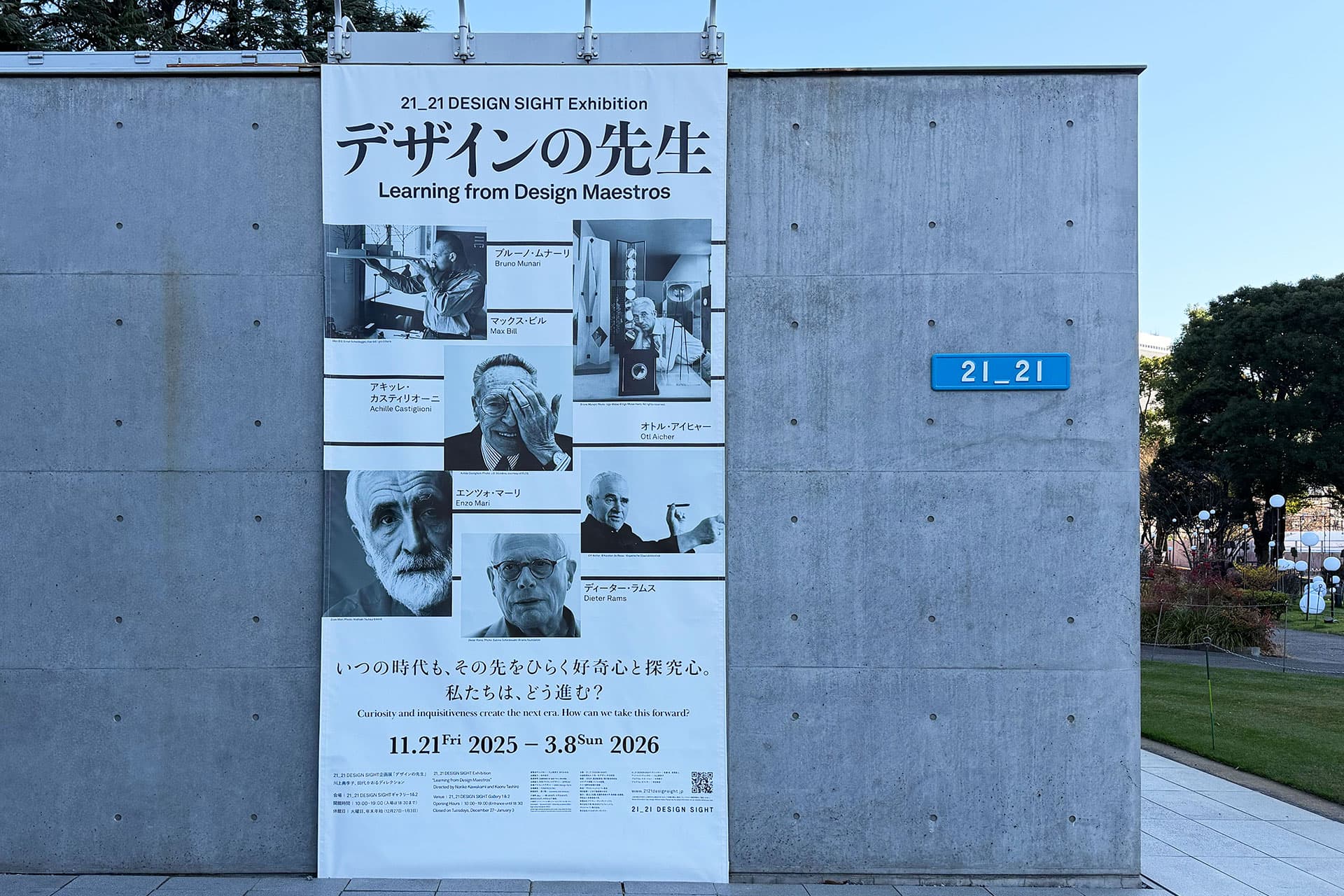
"Learning from Design Maestros"

DATE : November 21 (Fri), 2025 - March 8 (Sun), 2026- 10:00 - 19:00 ( Entrance until 18:30 )
Closed: Tuesdays, and from December 27 to January 3
Admission Fees:
General: ¥1,600
University Students: ¥800
High School Students: ¥500
Junior High School Students and under: Free
(Online tickets are available via Art Sticker)
21_21 DESIGN SIGHT Gallery 1 & 2
9-7-6 Akasaka, Minato-ku, Tokyo 107-0052

Mori Art Museum-Roppongi Crossing 2025: What Passes Is Time. We Are Eternal.

Mori Art Museum-Roppongi Crossing 2025: What Passes Is Time. We Are Eternal.
A Journey Through Time: Reimagining “Japan”

Walking into “Roppongi Crossing 2025: What Passes Is Time. We Are Eternal.” at the Mori Art Museum, I felt immediately enveloped by many interpretations of “time.” The exhibition uses this universal theme to examine contemporary “Japan” through personal, cultural, and geopolitical perspectives.

To help contextualise these impressions, I gave a visitor’s reflection below, followed by the essential exhibition details.

這場位於森美術館的「六本木交叉口 2025:流逝的是時間。我們是永恆。」,不僅是一場當代藝術的集結,更是一場關於「時間」的多重感官體驗。

以下是作為參訪者,整合的參展紀錄:

Mori Art Museum-Roppongi Crossing 2025: What Passes Is Time. We Are Eternal.

Photography : Rolen

Mori Art Museum-Roppongi Crossing 2025: What Passes Is Time. We Are Eternal.

Photography : Rolen

The Interplay of Fine Craftsmanship and Visual Impact

  • Intricate Details: Upon entering, I encountered a diverse array of works. Oki Junko’s embroidery, which resembles delicate abstract paintings, stood out alongside the contributions of Shoji Asami and Hiro Naotaka.

  • Immersive Transformations: Having seen A.A.Murakami’s previous collaborations in Shanghai, seeing The Moon Underwater here was a revelation. This installation uses AI-guided robotics, bubbles, and water to create a space that transcends the boundaries between design and architecture.

  • Stunning Glasswork: Kelly Akashi’s piece, Astral Echo, truly took my breath away. Her use of flame-worked borosilicate glass paired with weathering steel and wood creates a sense of fragility and resonance that feels both ancient and modern.

踏入展場,首先感受到的是策展團隊試圖透過「時間」這個主題,重新定義與審視當代的「日本」。展覽副標題取自印尼詩人 Sapardi Djoko Damono 的詩句,寓意在流逝的瞬間中尋找永恆的意義。

精湛工藝的視覺衝擊: 一進入會場,Oki Junko 猶如抽象畫般的精細刺繡、Shoji Asami 的作品以及 Hiro Naotaka 的裝置藝術交織在一起。最令我驚嘆的是 Kelly Akashi 的琉璃藝術作品《Astral Echo》,她利用精緻的手工硼矽酸鹽玻璃,在木頭與耐候鋼的襯托下,展現出極致的細節美感。

跨越地域的藝術重逢: 曾在上海見過 A.A.Murakami 與 COS 合作的裝置藝術,這次在東京以《The Moon Underwater》之名重新呈現。這件作品結合了 AI 引導的機器人系統、氣泡與水,與過去的呈現方式截然不同,營造出一個超越建築與設計邊界的沉浸式空間。

Mori Art Museum-Roppongi Crossing 2025: What Passes Is Time. We Are Eternal.Norio_Nakamura_GGG_7

Photography : Rolen

Norio_Nakamura_GGG_9

Photography : Rolen

The Blur Between Reality and Artifice

The exhibition masterfully challenges our perception of the everyday:

  • Paper Reality: The artist group ZUGAKOUSAKU & KURIEITO presented Subway Exit 2, a life-sized installation made entirely of water-based paint on cardboard. Its lifelike presence makes you feel as though a real subway entrance has manifested inside the gallery.

  • The Brandy Horizon: Wada Reijiro’s MITTAG is a striking square glass structure containing brandy. Positioned against the backdrop of the Roppongi high-rises, the liquid forms a golden horizontal line that dialogues beautifully with the urban landscape outside.

  • Multisensory Experiences: From Shooshie Sulaiman’s installation involving roof tiles to Hosoi Miyu’s new sound piece created from her own voice, the exhibition uses varied media to explore geopolitical and personal time. Contributions from Gardar Eide Einarsson, Kim Insook, and Kitazawa Jun further expand this dialogue into social and regional contexts.

現實與超現實的交界

展覽中許多作品挑戰了我們對日常物件的認知:

紙造的真實感ZUGAKOUSAKU & KURIEITO 的作品《Subway Exit 2》,竟是用瓦楞紙和水性漆造出的車站入口,其真實程度讓人彷彿置身於地鐵站中。

液體的水平線Wada Reijiro 的作品《MITTAG》面對著展覽館窗外的高樓風景,他在正方形玻璃內注入白蘭地,形成一道金色的水平線,將物質與景觀進行了詩意的平行對話。

多元的感官詮釋Shooshie Sulaiman 的屋瓦裝置、Hosoi Miyu 利用自身聲音創作的新型聲響作品,以及 Gardar Eide EinarssonKim InsookKitazawa Jun 的作品,分別從地緣政治、個人記憶到社會專案等不同角度,體現了時間的多元面貌

Mori Art Museum-Roppongi Crossing 2025: What Passes Is Time. We Are Eternal.

Photography : Rolen

Norio_Nakamura_GGG_12Norio_Nakamura_GGG_11

Photography : Rolen

Norio_Nakamura_GGG_10

Photography : Rolen

Concluding with a Game of Possibilities

The journey ends with an interactive challenge by Kihara Tomo titled What Plays You? — Game of Possible Lives. This installation, which utilises a large language model (LLM) and a game cabinet, invites us to play with the concept of life itself, forcing a final reflection on how we survive in our increasingly complex society.

總結:一場與未來的遊戲對話

展覽的結尾是由 Kihara Tomo 策劃的互動裝置《What Plays You? — Game of Possible Lives》。這不僅是一台遊戲機,更結合了大型語言模型(LLM),透過提問與遊戲的形式,讓我們在離開前再次思考生存與時間的本質

這場展覽證明了,在日益碎片化的現代社會中,藝術能成為促進同理心與對話的催化劑

Journey
Norio_Nakamura_GGG_vertical

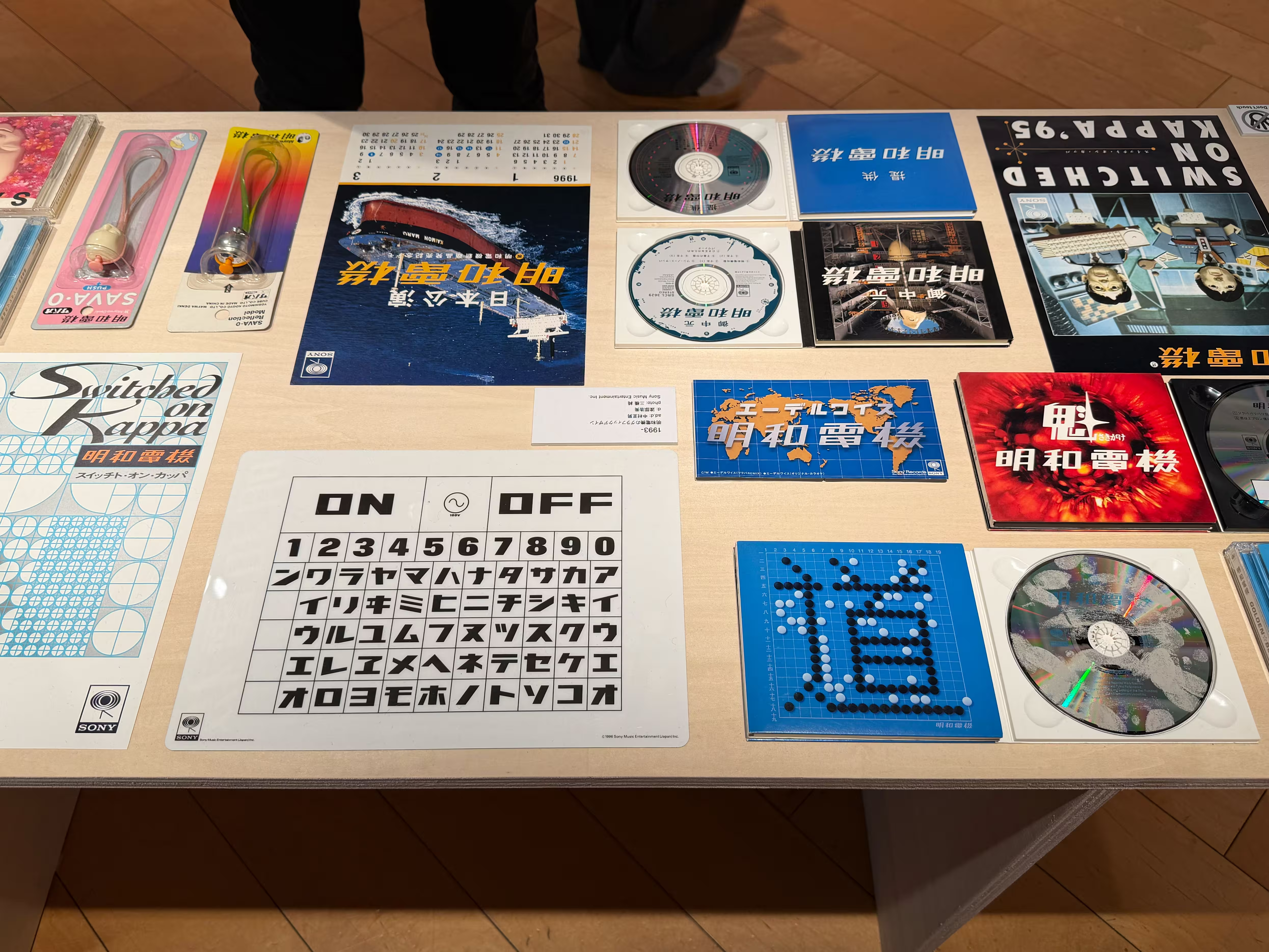
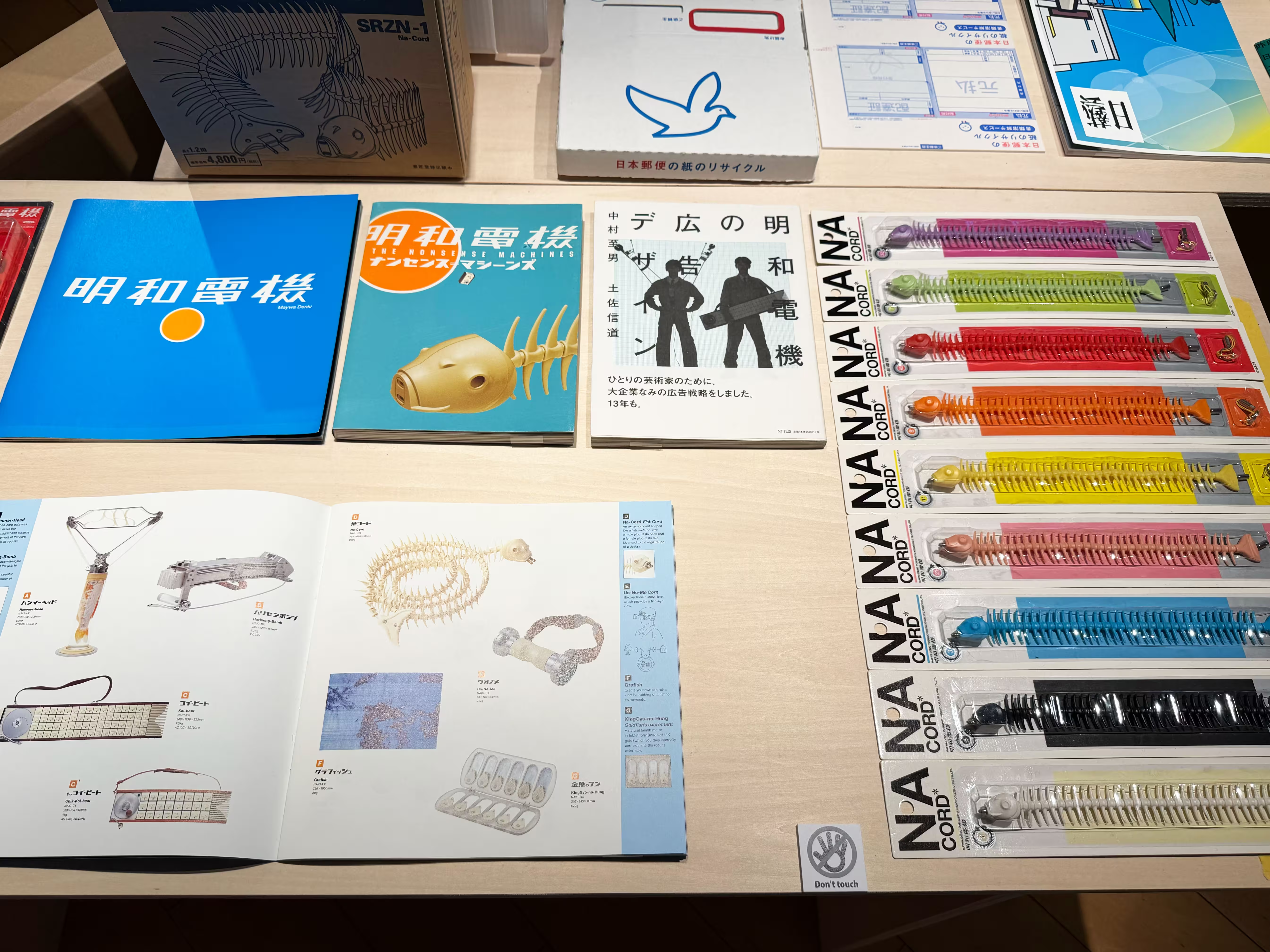
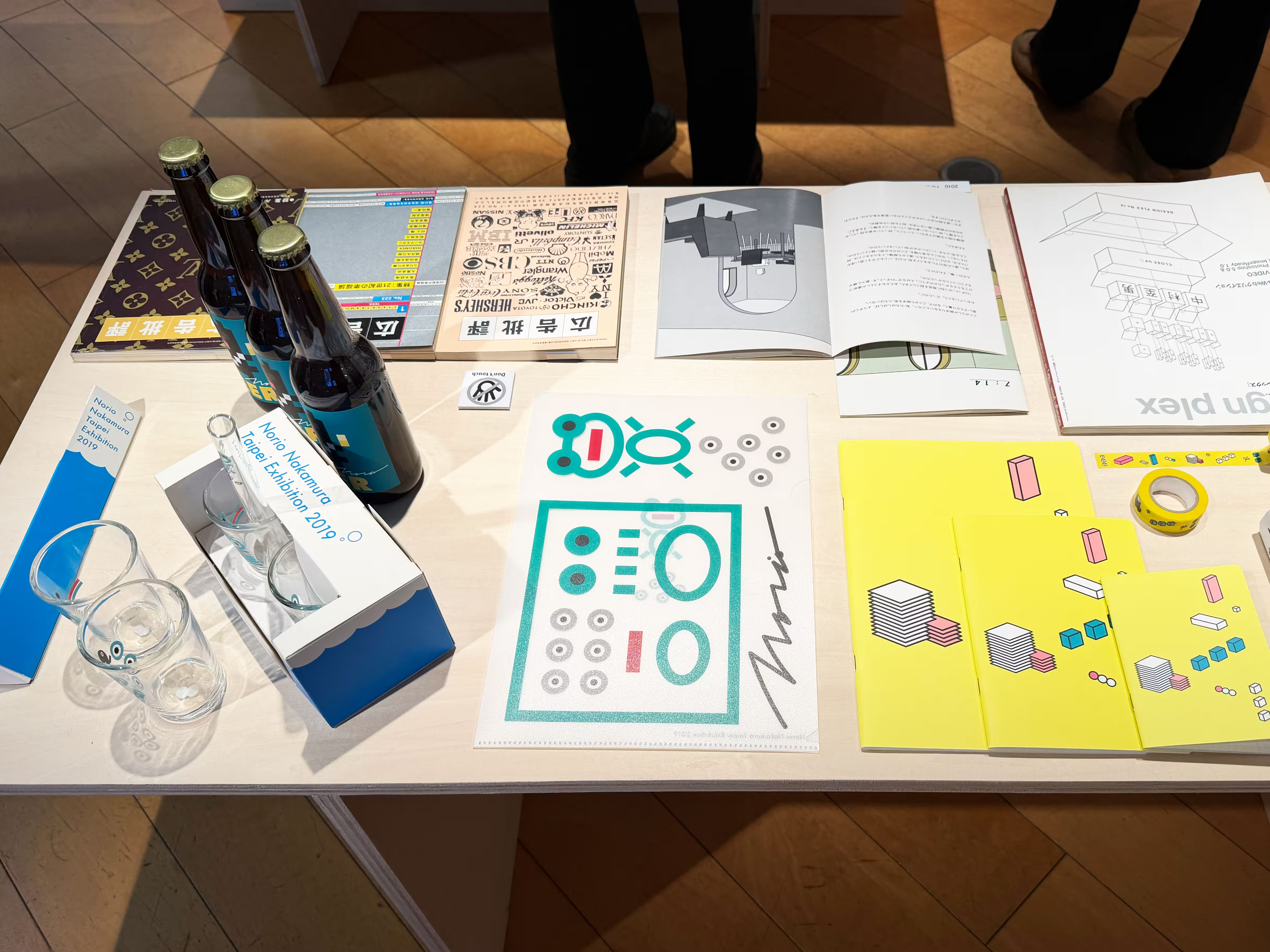
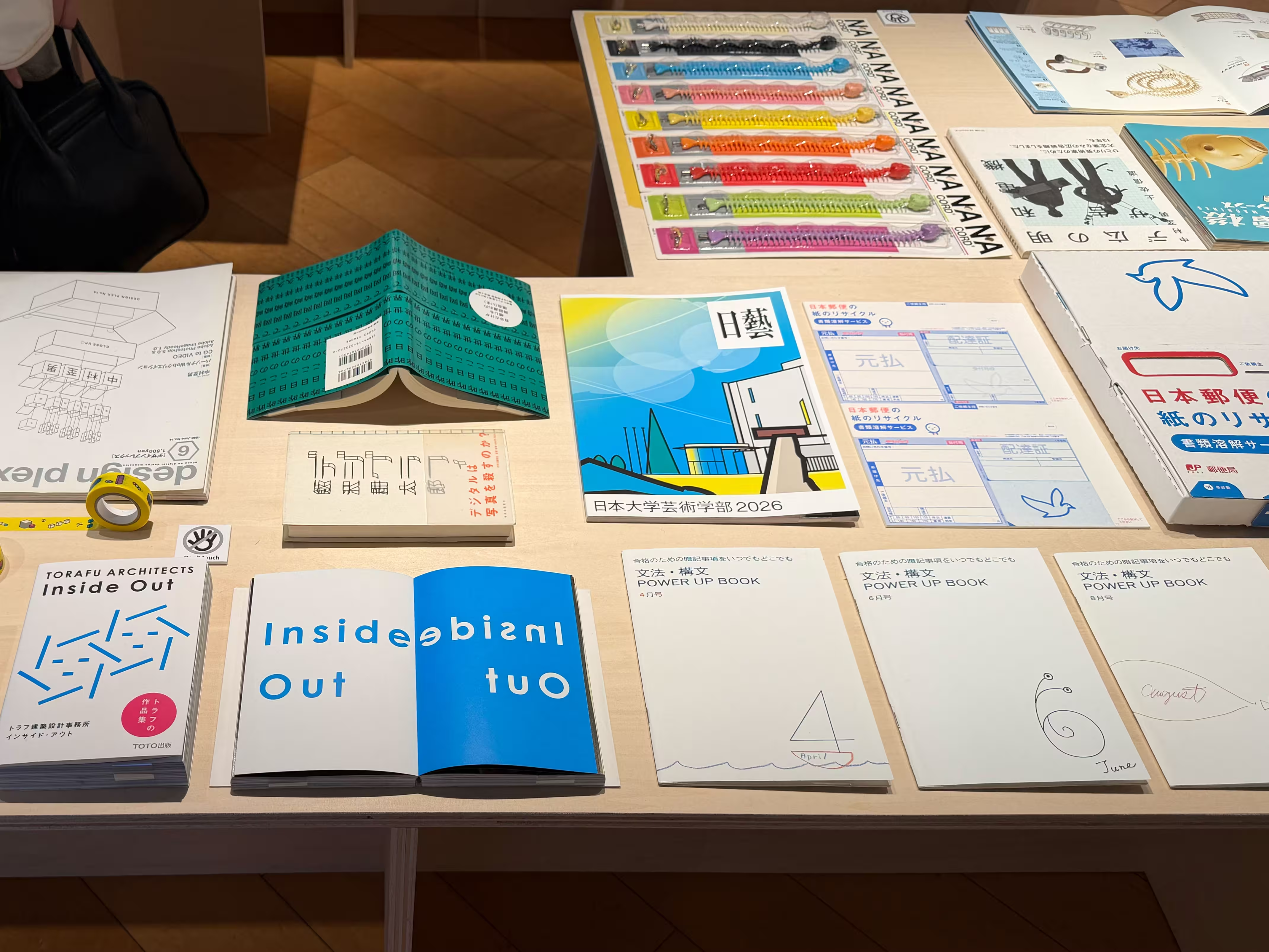
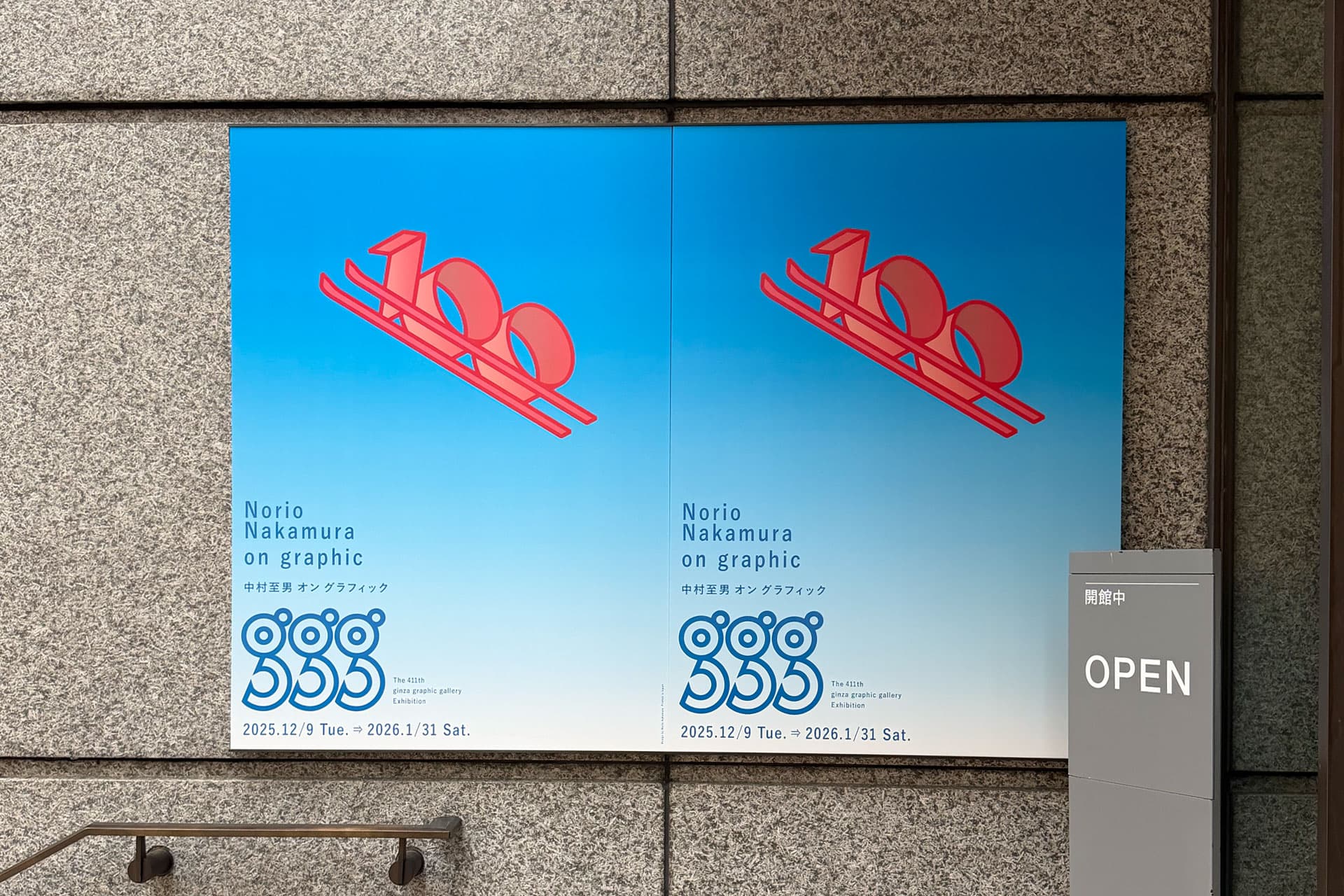
The 411th ginza graphic gallery Exhibition: Norio Nakamura on graphic

Dates: December 09, 2025 – January 31, 2026
Admission: Free
Ginza Graphic Gallery
ギンザ・グラフィック・ギャラリー (ggg) (DNP Ginza Building 1F, B1F)

Mori Art Museum-Roppongi Crossing 2025: What Passes Is Time. We Are Eternal.

Mori Art Museum-Roppongi Crossing 2025: What Passes Is Time. We Are Eternal.
A Journey Through Time: Reimagining “Japan”

Walking into “Roppongi Crossing 2025: What Passes Is Time. We Are Eternal.” at the Mori Art Museum, I felt immediately enveloped by many interpretations of “time.” The exhibition uses this universal theme to examine contemporary “Japan” through personal, cultural, and geopolitical perspectives.

To help contextualise these impressions, I gave a visitor’s reflection below, followed by the essential exhibition details.

這場位於森美術館的「六本木交叉口 2025:流逝的是時間。我們是永恆。」,不僅是一場當代藝術的集結,更是一場關於「時間」的多重感官體驗。

以下是作為參訪者,整合的參展紀錄:

Mori Art Museum-Roppongi Crossing 2025: What Passes Is Time. We Are Eternal.

Photography : Rolen

The Interplay of Fine Craftsmanship and Visual Impact

  • Intricate Details: Upon entering, I encountered a diverse array of works. Oki Junko’s embroidery, which resembles delicate abstract paintings, stood out alongside the contributions of Shoji Asami and Hiro Naotaka.

  • Immersive Transformations: Having seen A.A.Murakami’s previous collaborations in Shanghai, seeing The Moon Underwater here was a revelation. This installation uses AI-guided robotics, bubbles, and water to create a space that transcends the boundaries between design and architecture.

  • Stunning Glasswork: Kelly Akashi’s piece, Astral Echo, truly took my breath away. Her use of flame-worked borosilicate glass paired with weathering steel and wood creates a sense of fragility and resonance that feels both ancient and modern.

踏入展場,首先感受到的是策展團隊試圖透過「時間」這個主題,重新定義與審視當代的「日本」。展覽副標題取自印尼詩人 Sapardi Djoko Damono 的詩句,寓意在流逝的瞬間中尋找永恆的意義。

精湛工藝的視覺衝擊: 一進入會場,Oki Junko 猶如抽象畫般的精細刺繡、Shoji Asami 的作品以及 Hiro Naotaka 的裝置藝術交織在一起。最令我驚嘆的是 Kelly Akashi 的琉璃藝術作品《Astral Echo》,她利用精緻的手工硼矽酸鹽玻璃,在木頭與耐候鋼的襯托下,展現出極致的細節美感。

跨越地域的藝術重逢: 曾在上海見過 A.A.Murakami 與 COS 合作的裝置藝術,這次在東京以《The Moon Underwater》之名重新呈現。這件作品結合了 AI 引導的機器人系統、氣泡與水,與過去的呈現方式截然不同,營造出一個超越建築與設計邊界的沉浸式空間。

Mori Art Museum-Roppongi Crossing 2025: What Passes Is Time. We Are Eternal.

Photography : Rolen

Mori Art Museum-Roppongi Crossing 2025: What Passes Is Time. We Are Eternal.Mori Art Museum-Roppongi Crossing 2025: What Passes Is Time. We Are Eternal.

Photography : Rolen

Mori Art Museum-Roppongi Crossing 2025: What Passes Is Time. We Are Eternal.Mori Art Museum-Roppongi Crossing 2025: What Passes Is Time. We Are Eternal.

Photography : Rolen

The Blur Between Reality and Artifice

The exhibition masterfully challenges our perception of the everyday:

  • Paper Reality: The artist group ZUGAKOUSAKU & KURIEITO presented Subway Exit 2, a life-sized installation made entirely of water-based paint on cardboard. Its lifelike presence makes you feel as though a real subway entrance has manifested inside the gallery.

  • The Brandy Horizon: Wada Reijiro’s MITTAG is a striking square glass structure containing brandy. Positioned against the backdrop of the Roppongi high-rises, the liquid forms a golden horizontal line that dialogues beautifully with the urban landscape outside.

  • Multisensory Experiences: From Shooshie Sulaiman’s installation involving roof tiles to Hosoi Miyu’s new sound piece created from her own voice, the exhibition uses varied media to explore geopolitical and personal time. Contributions from Gardar Eide Einarsson, Kim Insook, and Kitazawa Jun further expand this dialogue into social and regional contexts.

現實與超現實的交界

展覽中許多作品挑戰了我們對日常物件的認知:

紙造的真實感ZUGAKOUSAKU & KURIEITO 的作品《Subway Exit 2》,竟是用瓦楞紙和水性漆造出的車站入口,其真實程度讓人彷彿置身於地鐵站中。

液體的水平線Wada Reijiro 的作品《MITTAG》面對著展覽館窗外的高樓風景,他在正方形玻璃內注入白蘭地,形成一道金色的水平線,將物質與景觀進行了詩意的平行對話。

多元的感官詮釋Shooshie Sulaiman 的屋瓦裝置、Hosoi Miyu 利用自身聲音創作的新型聲響作品,以及 Gardar Eide EinarssonKim InsookKitazawa Jun 的作品,分別從地緣政治、個人記憶到社會專案等不同角度,體現了時間的多元面貌
Roppongi_Crossing_2025-11

Photography : Rolen

Roppongi_Crossing_2025-15

Photography : Rolen

Roppongi_Crossing_2025-7

Photography : Rolen

Roppongi_Crossing_2025-3Roppongi_Crossing_2025-5

Photography : Rolen

Roppongi_Crossing_2025-3

Photography : Rolen

Roppongi_Crossing_2025-17

Photography : Rolen

Concluding with a Game of Possibilities

The journey ends with an interactive challenge by Kihara Tomo titled What Plays You? — Game of Possible Lives. This installation, which utilises a large language model (LLM) and a game cabinet, invites us to play with the concept of life itself, forcing a final reflection on how we survive in our increasingly complex society.

總結:一場與未來的遊戲對話

展覽的結尾是由 Kihara Tomo 策劃的互動裝置《What Plays You? — Game of Possible Lives》。這不僅是一台遊戲機,更結合了大型語言模型(LLM),透過提問與遊戲的形式,讓我們在離開前再次思考生存與時間的本質

這場展覽證明了,在日益碎片化的現代社會中,藝術能成為促進同理心與對話的催化劑

Journey
Roppongi_Crossing_2025-vertical_m

Roppongi Crossing 2025: What Passes Is Time. We Are Eternal.

Dates : December 3, 2025 – March 29, 2026
Opening Hours : 10:00–22:00 (Tuesdays until 17:00)
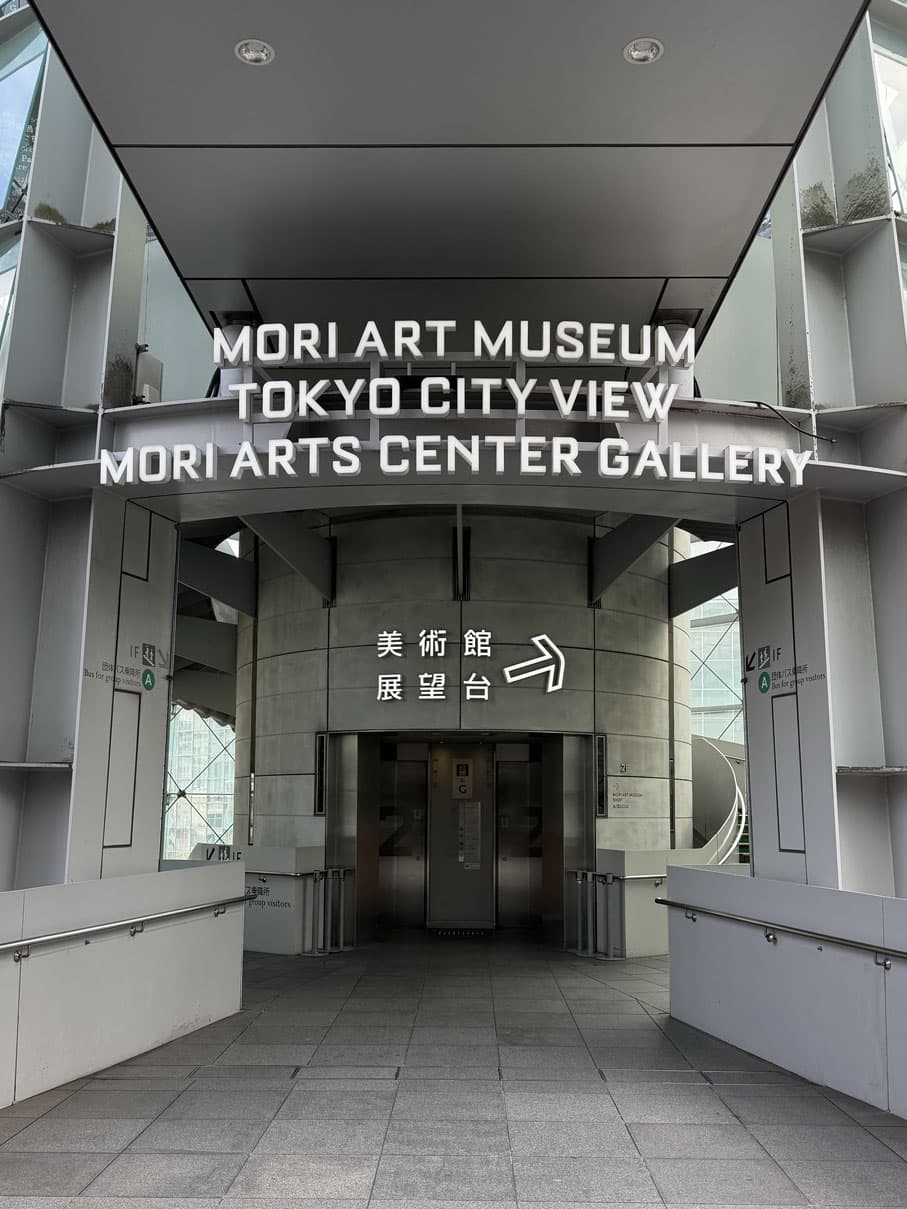
Mori Art Museum (53F, Roppongi Hills Mori Tower)
Roppongi Hills Mori Tower, 6-10-1 Roppongi, Minato-ku, Tokyo, Japan